
About This Course
This course provides a practical and strategic introduction to how organisations use social media to understand customers, build relationships, and achieve business goals. It begins by examining how digital platforms have changed consumer behaviour, placing greater emphasis on engagement, influence and online “moments of truth”. Students explore the role of paid, owned and earned media and learn why two-way communication, rather than one-way promotion, is central to modern marketing.
The course then focuses on strategy and planning. Students learn how to align social media objectives with wider business and marketing goals, set SMART objectives, and measure performance across the sales funnel. Key concepts such as audience segmentation, demographics, psychographics and digital habits are used to identify and target the most valuable audiences. Students also analyse competitors, select appropriate platforms, and explore how influencers and communities shape brand visibility.
The final part of the course moves into implementation through content marketing. Students learn how to create a clear brand voice, develop content plans, and use storytelling, visual media and platform-specific formats to build engagement. Emphasis is placed on balancing valuable content with promotion, maintaining consistency, and using data and feedback to continuously improve performance.
Who is it for? Who should attend this course?
Business-focused learners who need to use social media strategically.
More specifically, it is designed for:
- Business owners and entrepreneurs who want to attract customers, build relationships, and grow their brand online.
- Employees who are responsible for managing social media accounts, campaigns, or customer engagement.
- Managers and professionals who oversee brand reputation, customer service, or online communities and need to make informed decisions about platforms, content, and ROI.
Why study this course?
Following the course participants should be able to:
1. Understand their customers and targeting strategy
Businesses learn how to identify who their online customers really are, how they behave on different platforms, and what motivates them to engage. By applying audience segmentation, digital habits analysis and competitor benchmarking, businesses can start reaching the people most likely to buy, recommend, and engage.
2. Deliver more effective and efficient social media marketing
Rather than posting randomly, businesses gain the ability to plan, measure and optimise their social media activity. They learn how to set SMART objectives, link social media to wider business goals, and use metrics such as reach, engagement and traffic to demonstrate return on investment. In turn, this makes social media more cost-effective, targeted and accountable than traditional advertising.
3. Develop stronger brand relationships and reputation
The course shows how to use content, storytelling and two-way engagement to build trust, loyalty and advocacy. Businesses learn how to develop a consistent brand voice, respond to customers, and use social platforms to humanise the brand—turning followers into active communities and brand advocates, rather than passive audiences.
How long does this course take to complete:
This one-day course runs for a total of 6 hours and takes place on Thursday, 12th of November from 9:30am to 4:30pm.
Location
Building: Alun Building, Room A1.01 (First Floor) College Road, Bangor, Gwynedd, LL57 2DG
Tutor
Dr Steffan Thomas - Senior Lecturer (The Albert Gubay Business School)
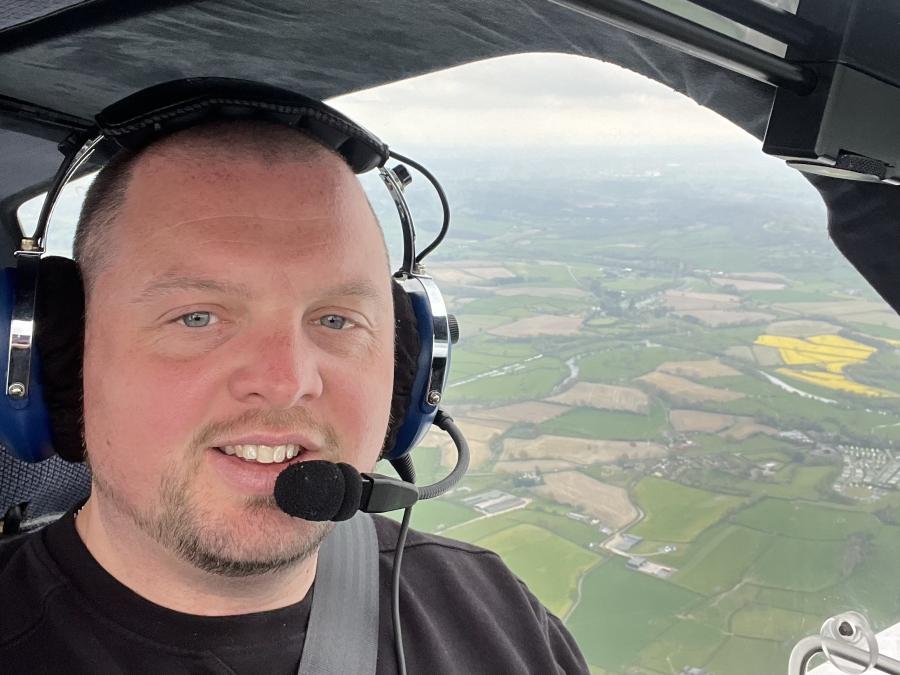
I am a senior lecturer at Bangor University, teaching and supervising undergraduate, post graduate and research students.
In 2015 I completed my PhD in Business Management researching the digital distribution and marketing of experience products, specifically the marketing, copyright and revenue potential for digital music in niche markets.
My current research areas are in consumer relationships, digital distribution, business modelling, intellectual property and the perceived value of digital relationships. I am also interested in SME engagement and regional regeneration.
As well as my lecturing position I have been a director of a Social Enterprise running several community-based businesses including a town market and a golf course. Previously I have worked as an academic researcher as well as in radio and television production.
Over the last three years, I have provided training and consultancy to around 100 different organisations about marketing, and more specifically social and digital marketing. I have helped companies increase their online engagement and as a result their revenue. My focus is always on maximising known techniques for increasing reach, whilst spending as little money as possible on paid campaigns
Course Content
What will you study on this course?
Following the course participants should be able to:
1. Analyse and define target audiences for social media marketing
Evaluate customer needs, digital behaviours, and competitive activity to identify and justify appropriate social media audiences and platforms for a given organisation.
2. Design a coherent social media marketing strategy
Develop SMART social media objectives aligned with business and marketing goals, selecting suitable channels, tactics, and metrics to support brand awareness, engagement, and customer acquisition.
3. Create and justify effective social media content plans
Produce a platform-specific content strategy that applies brand voice, storytelling, and engagement principles to deliver value-driven content while balancing promotional and non-promotional activity.
Course Cost
The cost of this course is £100.
No assessments – Learners will receive certificate of completion after completing the course
Entry Requirements
Does the learner require any specific qualification or work experience?
No previous qualification or experience required
Level of English language skills
This course will be delivered through the medium of English. If you are not fluent in English: we do not require formal proof of your proficiency of English. However, as our Short Courses are University level courses, we strongly recommend that you should have a level at least equivalent to IELTS 6.5 to fully benefit.