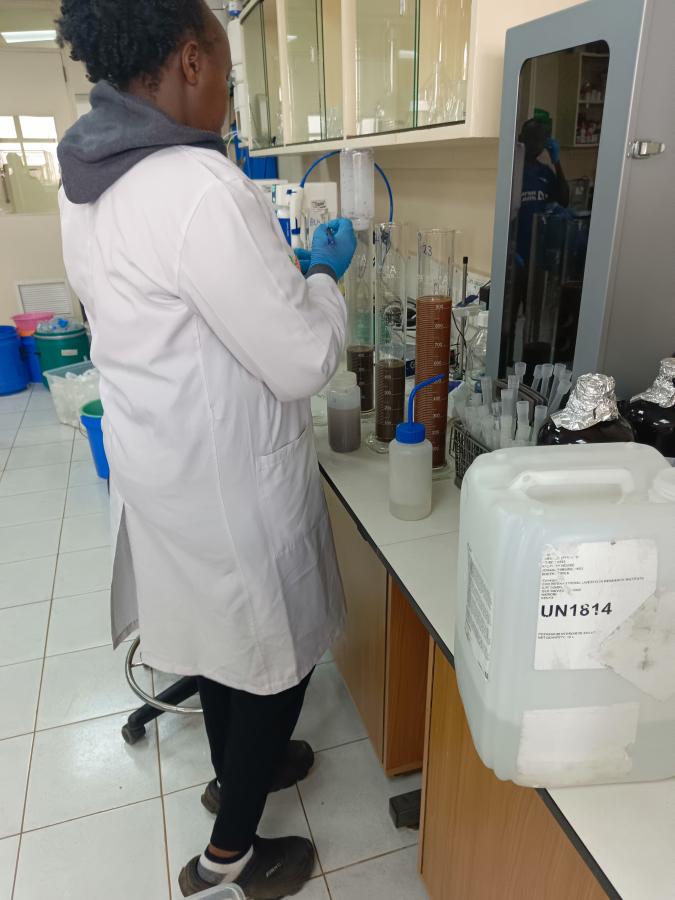

Inside the Mazingira Centre Lab: HABITAT Project Students Experience
Blog compiled by: Simon Mwaura, Bangor University Students: Winnie Chepkemoi, Caroline Chepkoech Kitur, and Daniel Rotich Affiliation: University of Eldoret & ILRI Project: HABITAT – Harnessing Pasture Biodiversity and Productivity Location: Bomet County, Kenya & Mazingira Centre, ILRI, Nairobi, Kenya.
This blog post is a follow-up to our first student blog on field experiences where the students shared their field experiences in Bomet County. Winnie collected forage samples to evaluate nutritional quality and emission potential, Caroline examined the links between soil health and plant biodiversity while Daniel mapped indigenous farmer knowledge. Here we share the students’ experiences of their three-month placement at the ILRI’s Mazingira Centre. The Mazingira Centre’s vision is to define and create environmentally friendly, climate-smart, and food- and nutrition-secure livelihoods for smallholder farmers and livestock keepers in the Global South. A key highlight of this laboratory experience was the students’ participation in the 9th International Greenhouse Gas & Animal Agriculture Conference (GGAA 2025) held at the Sarit Expo Centre, Kenya’s largest purpose-built conference venue. This Conference provided students with much needed learning insights for their data analysis and provided a valuable opportunity to network with peers and experts.
Daniel Rotich, MSc Student, University of Eldoret
From Field Data to Reliable Evidence: My Analysis Experience
I am Daniel, an MSc student from University of Eldoret. The first stage of my MSc thesis was field data collection for the pasture biodiversity assessment and Cultural Domain Analysis (CDA). As a second stage, I moved to the analysis phase of the research at the Mazingira Centre. While most of my earlier work was field-based, I then focused primarily on data management, a critical component of the research process.
My main responsibilities involved data cleaning and entry, where I organized biodiversity and cultural domain datasets collected from the field. I then analysed the data using….. . This stage highlighted an important lesson: the credibility and reliability of research findings depend heavily on accuracy during data handling. Even minor errors at this stage can significantly influence final results and interpretations.
In addition to data work, I assisted the soil laboratory team with soil sample preparation and supported in-vitro nutrient analysis. Although my role was mainly supportive, closely observing laboratory procedures enhanced my understanding of proper sample handling and the importance of adhering to standard protocols to prevent contamination.
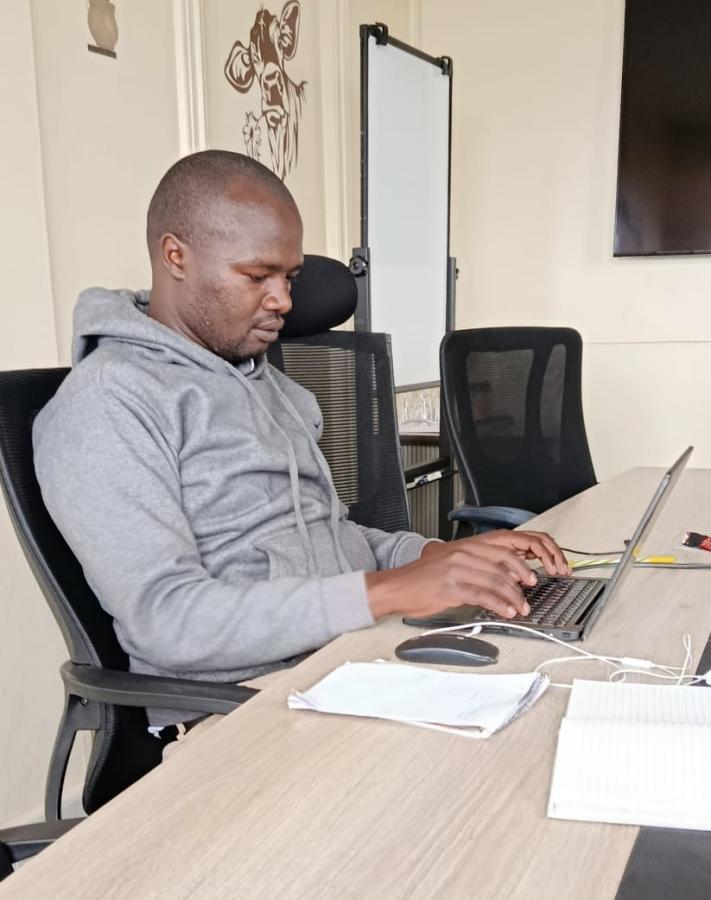
Beyond technical tasks, I interacted with Mazingira Centre staff and fellow students, gaining exposure to multidisciplinary collaboration in environmental and livestock research. I also attended Mazingira seminar presentations[JG1] , which strengthened my understanding of scientific communication and the effective presentation of research findings. For example, Rosemary Olang an ILRI Graduate Fellow and a Doctoral student at the Technical University Munich presented a seminar on biodiversity assessment of Kapiti ILRI Research station which provided me with insights on how to make a good presentation and also analyse biodiversity indices which is key to my current research.
Overall, my experience reinforced my perception that research is a continuous process linking fieldwork, laboratory analysis, and data interpretation. Even in a supportive role, I gained valuable insights into the importance of precision, teamwork, and clear communication in producing credible scientific knowledge. I wish to thank Kelvin Kinuthia (ILRI) for working closely with me and offering much needed guidance and support during my laboratory stay.
Winnie Chepkemoi, MSc Student, University of Eldoret
Exploring Pasture Diversity, Feed Quality, and Methane Emissions
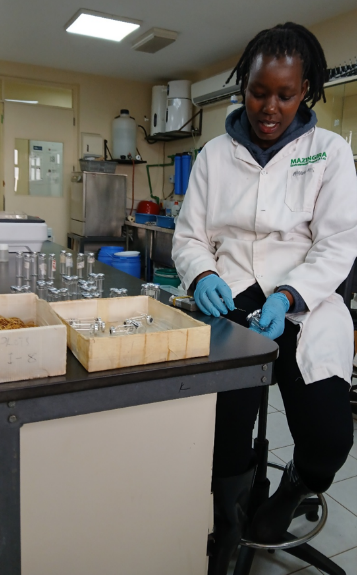
I am Winnie, MSc student from University of Eldoret. My laboratory work at ILRI’s Mazingira Centre focused on understanding how pasture diversity influences feed quality, dairy production, and greenhouse gas emissions. Using in-vitro laboratory techniques, specifically using simulated rumen fermentation, I examined the effects of different legumes, grasses, and fodder trees on nutrient content, dry matter digestibility, and methane production.
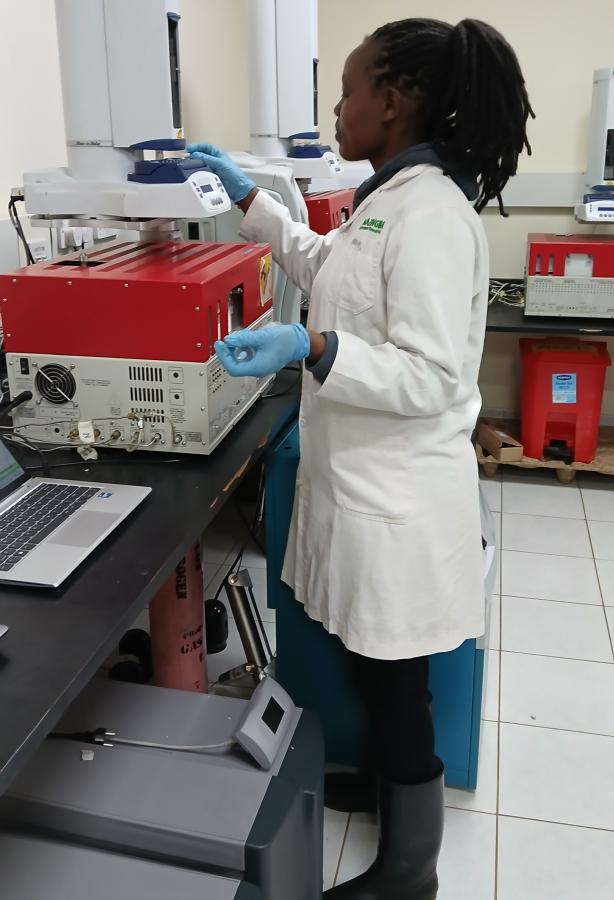
Digestibility is a key indicator of cattle nutrition, as it reflects how efficiently animals can gain energy and protein from pasture. At the Mazingira laboratory, I applied in-vitro gas production techniques to simulate rumen fermentation. Pasture samples were incubated in rumen fluid, enabling the observation of forage breakdown and measurement of gas production.
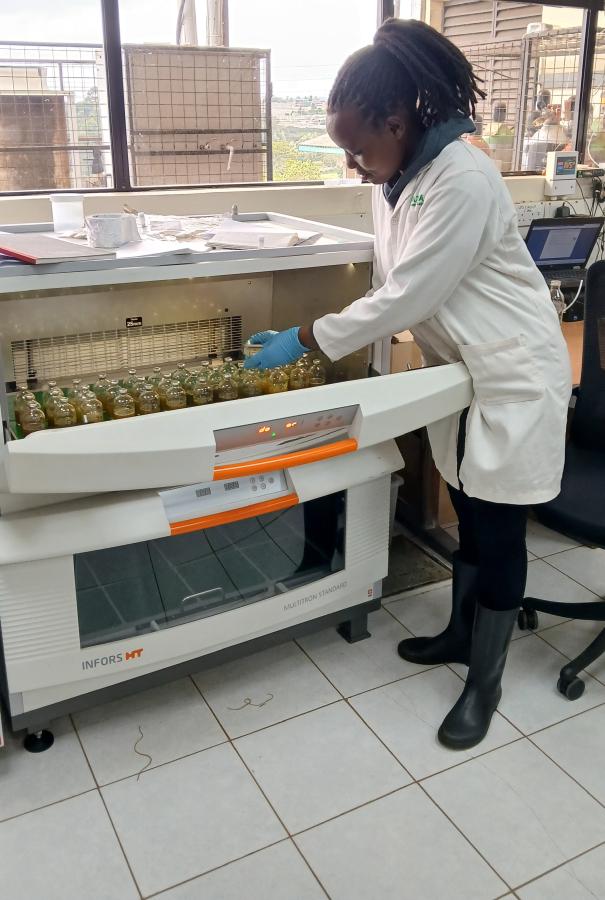
This approach provided valuable insights into how different forage-types influence nutrient availability and methane emissions, both of which are critical considerations for developing climate-smart and sustainable livestock systems.
I gained hands-on experience in preparing pasture samples and conducting in vitro rumen fermentation analysis. This work deepened my understanding of how pasture diversity—particularly the use of legumes and fodder trees—improves feed digestibility and nutrient availability, while also helping to reduce methane emissions. My experience at the International Livestock Research Institute (ILRI) strengthened my attention to detail, teamwork skills, and appreciation of how research contributes to food security and environmental conservation.
I sincerely acknowledge the valuable support offered by ILRI staff including; Claudia Arndt, Endale Gurmu Balcha, Daniel Mulat, Edward Garcia and Jesse Kagai for their valuable guidance, technical support, and scientific input throughout the course of this work. I am also grateful to Rodgers Rogito for his assistance during laboratory activities and data collection.
Caroline Chepkoech, MSc Student, University of Eldoret
Soil Health Analysis for Climate-Smart Agriculture
My name is Carloine, I am an MSc student at University of Eldoret. For my thesis, understanding soil health is central to understand how to build resilient agricultural systems, supporting climate-smart farming, and strengthening food security. At the Mazingira Centre, I had the opportunity to contribute to this mission through the hands-on laboratory analysis of soil samples collected from diverse agroecological zones in Bomet County.
Each day in the laboratory began with careful sample handling, including labelling, weighing, coding, and organizing soil samples. Precision was essential. Measurements of soil pH, moisture content, nutrient concentrations, and organic carbon provided important insights into how soils respond to land use, climate variability, and management practices.
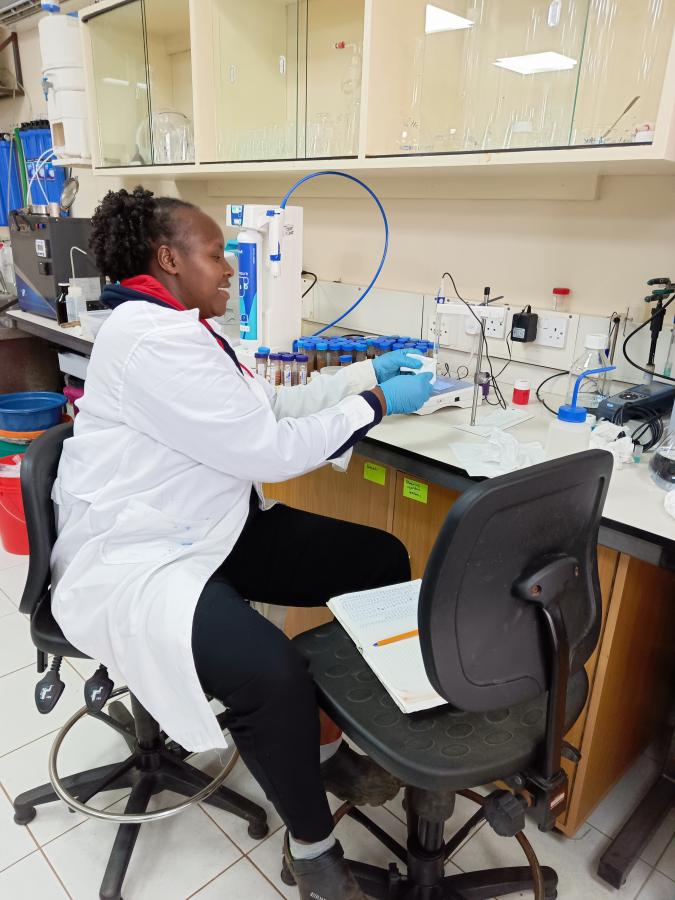
By following standardized laboratory protocols and working with modern analytical tools, I ensured that all generated datasets were reliable and suitable for scientific interpretation. These analyses contribute to broader research efforts aimed at improving soil fertility, enhancing livestock productivity, and reducing environmental impacts across East Africa.
Working at the Mazingira Centre strengthened my analytical skills, data management abilities, and experience within interdisciplinary research teams. Managing high sample volumes, adapting to new methodologies, and working in a fast-paced research environment enhanced both my confidence and resilience as a researcher.
One of the most enriching experiences during my time at the Mazingira Centre was attending the 9th Global Alliance on Agricultural Greenhouse Gases (GGAA) Conference, where I learned about cutting-edge climate research and interacted with global scientists.
What I value most is how fieldwork, laboratory science, and data analysis come together to support evidence-based solutions. Every sample processed contributes to a clearer understanding of how soils can be sustainably managed for future generations. I wish to thank Kelvin Kinuthia (ILRI) for working closely with me and offering much needed guidance and support during my laboratory stay.