
Home

Information for:

  • Alumni
  • Applicants
  • Parents
  • My Bangor
  • Jobs
  • Cymraeg
My country:

Main Menu

    • Undergraduate
      • A–Z of Courses
      • Subject Areas
      • How to Apply
      • Already Applied
      • Applicant Hub
      • Fees and Finances
      • Scholarship and Bursaries
      • Widening Access
      • Study in Welsh
      • Part-Time Study
      • Degree Apprenticeships
      • Study or Work Abroad
      • Work Experience
      • Student Accommodation
      • Pocket Prospectus
      • Academic Calendar
    • Postgraduate Taught
      • A-Z of Courses
      • Subject Areas
      • How to Apply
      • Fees and Finances
      • Scholarships and Bursaries
      • Executive Education
      • January Start
      • Part-Time Study
      • Short Courses and CPD
      • A-Z of Short Courses and CPD
    • Postgraduate Research
      • A-Z of Courses
      • Subject Areas
      • How to Apply
      • Funding
      • The Doctoral School

    Find a Course

    Open Days

    Postgraduate Event

    Applicant Hub

    Virtual Tour

    Order a Pocket Prospectus

    • Student Life
      • Student Life Home
      • Bangor and the Area
      • Social Life and Entertainment
      • Student Accommodation
      • Clubs and Societies
      • Sport
      • Virtual Tour
      • Videos and Vlogs
    • Your Experience at Bangor
      • Student Support
      • Skills and Employability
      • Study or Work Abroad
      • Fees and Finances
      • Student Ambassadors

    Student Profiles

    Student Videos and Vlogs

    Virtual Tour

    • Choose Bangor
      • A-Z of Courses
      • International Home
      • Why Bangor?
      • Location
      • Accommodation
      • Student Support
      • Contact Us
      • Bangor University's China website
    • Apply
      • Entry Requirements
      • Tuition Fees and Scholarships
      • How to Apply
      • Already Applied
      • Study Abroad (Incoming)
      • Exchanges (Incoming)
      • Worldwide Partners

    May Intake Courses

    Your Country / Region

    Bangor University International College

    Find a Course

    • Research
      • Research Home
      • About Our Research
      • Research in our Academic Schools
      • Research Institutes and Centres
      • Research Portal
      • Integrated Research and Impact Support (IRIS) Service
      • Energy
      • REF 2021
      • Research News
    • Postgraduate Research Opportunities
      • Postgraduate Research
      • Doctoral Academy
    • Events and Training Opportunities
      • Researcher Development

    Royal Recognition: 2023 Queen's Anniversary Prize

    Bangor Research In Top 30 For Societal Impact In UK

    • The University
      • About Us
      • Our Mission
      • Strategy 2030
      • Annual Report & Financial Statements
      • Our Location
      • Academic Schools and Colleges
      • Services and Facilities
      • Vice-Chancellor's Office
      • Working with Business
      • Working with the Community
      • Sustainability
      • Health and Wellbeing
      • Contact Us
    • Working for Us
      • Job Vacancies
    • University Management and Governance
      • Policies and Procedures
      • Slavery and Human Trafficking Statement
      • Management and Governance
    • University and the Community
      • Pontio
      • Sports Facilities
      • Conference Facilities
      • Places to Eat and Drink
      • Public Events
      • Widening Access
      • Services to Schools
    • Business Services
      • Business Services Home
    • Collaboration Hub
      • Collaboration Hub
    • Conferencing and Business Dining
      • Conferencing Facilities
      • Business Dining
    • Intellectual Property (IP) and Commercialisation
      • Intellectual Property (IP) and Commercialisation
    • News
      • Current News
      • Research News
      • Student News
    • Events
      • Events
    • Announcements
      • Flag Announcements

    140th Anniversary

    Public Lectures

    • Open Days 2025/26
      • Mini Open Day - January 2026
      • Main University Open Days
      • Change / Cancel Booking
    • Prepare For The Open Day
      • Mini Open Day Programme
      • Accommodation Options
      • How to get to the Open Day
      • Open Day Parking
      • Student Support
      • Questions to Ask
      • Undergraduate Subject Areas
      • Welsh-medium Study
      • Food and Drink
      • Frequently Asked Questions
      • Discover Bangor and the Area
    • Postgraduate Event
      • Event Information

    Book Mini Open Day - January 2026

    Campus Map

    Virtual Tour

    • Undergraduate
      • A–Z of Courses
      • Subject Areas
      • How to Apply
      • Already Applied
      • Applicant Hub
      • Fees and Finances
      • Scholarship and Bursaries
      • Widening Access
      • Study in Welsh
      • Part-Time Study
      • Degree Apprenticeships
      • Study or Work Abroad
      • Work Experience
      • Student Accommodation
      • Pocket Prospectus
      • Academic Calendar
    • Postgraduate Taught
      • A-Z of Courses
      • Subject Areas
      • How to Apply
      • Fees and Finances
      • Scholarships and Bursaries
      • Executive Education
      • January Start
      • Part-Time Study
      • Short Courses and CPD
      • A-Z of Short Courses and CPD
    • Postgraduate Research
      • A-Z of Courses
      • Subject Areas
      • How to Apply
      • Funding
      • The Doctoral School

    Find a Course

    Open Days

    Postgraduate Event

    Applicant Hub

    Virtual Tour

    Order a Pocket Prospectus

    • Student Life
      • Student Life Home
      • Bangor and the Area
      • Social Life and Entertainment
      • Student Accommodation
      • Clubs and Societies
      • Sport
      • Virtual Tour
      • Videos and Vlogs
    • Your Experience at Bangor
      • Student Support
      • Skills and Employability
      • Study or Work Abroad
      • Fees and Finances
      • Student Ambassadors

    Student Profiles

    Student Videos and Vlogs

    Virtual Tour

    • Choose Bangor
      • A-Z of Courses
      • International Home
      • Why Bangor?
      • Location
      • Accommodation
      • Student Support
      • Contact Us
      • Bangor University's China website
    • Apply
      • Entry Requirements
      • Tuition Fees and Scholarships
      • How to Apply
      • Already Applied
      • Study Abroad (Incoming)
      • Exchanges (Incoming)
      • Worldwide Partners

    May Intake Courses

    Your Country / Region

    Bangor University International College

    Find a Course

    • Research
      • Research Home
      • About Our Research
      • Research in our Academic Schools
      • Research Institutes and Centres
      • Research Portal
      • Integrated Research and Impact Support (IRIS) Service
      • Energy
      • REF 2021
      • Research News
    • Postgraduate Research Opportunities
      • Postgraduate Research
      • Doctoral Academy
    • Events and Training Opportunities
      • Researcher Development

    Royal Recognition: 2023 Queen's Anniversary Prize

    Bangor Research In Top 30 For Societal Impact In UK

    • The University
      • About Us
      • Our Mission
      • Strategy 2030
      • Annual Report & Financial Statements
      • Our Location
      • Academic Schools and Colleges
      • Services and Facilities
      • Vice-Chancellor's Office
      • Working with Business
      • Working with the Community
      • Sustainability
      • Health and Wellbeing
      • Contact Us
    • Working for Us
      • Job Vacancies
    • University Management and Governance
      • Policies and Procedures
      • Slavery and Human Trafficking Statement
      • Management and Governance
    • University and the Community
      • Pontio
      • Sports Facilities
      • Conference Facilities
      • Places to Eat and Drink
      • Public Events
      • Widening Access
      • Services to Schools
    • Business Services
      • Business Services Home
    • Collaboration Hub
      • Collaboration Hub
    • Conferencing and Business Dining
      • Conferencing Facilities
      • Business Dining
    • Intellectual Property (IP) and Commercialisation
      • Intellectual Property (IP) and Commercialisation
    • News
      • Current News
      • Research News
      • Student News
    • Events
      • Events
    • Announcements
      • Flag Announcements

    140th Anniversary

    Public Lectures

    • Open Days 2025/26
      • Mini Open Day - January 2026
      • Main University Open Days
      • Change / Cancel Booking
    • Prepare For The Open Day
      • Mini Open Day Programme
      • Accommodation Options
      • How to get to the Open Day
      • Open Day Parking
      • Student Support
      • Questions to Ask
      • Undergraduate Subject Areas
      • Welsh-medium Study
      • Food and Drink
      • Frequently Asked Questions
      • Discover Bangor and the Area
    • Postgraduate Event
      • Event Information

    Book Mini Open Day - January 2026

    Campus Map

    Virtual Tour

Information for:

  • Alumni
  • Applicants
  • Parents
  • My Bangor
  • Jobs
My country:

Search

Close

Breadcrumb

  • Cymraeg

Share this page:
  • Twitter
  • Facebook
  • LinkedIn

Migrating bats use the setting sun
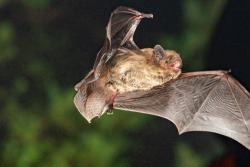
A soprano pipistrelle bat in flight: image (c) Christian GieseA soprano pipistrelle bat in flight: image (c) Christian GieseBats weighing no more than 6 grams, migrating over a thousand miles from the Baltic to Britain, could be the key to revealing how migrating mammals navigate.

We know more about how birds and reptiles and fish navigate than we do about mammals such as whales or wildebeest, but one part of the puzzle is revealed in the latest edition of Current Biology.

Working with colleagues at the Leibniz Institute for Zoo and Wildlife Research and the University of Latvia, Dr Richard Holland of Bangor University’s School of Natural Sciences, who has also studied navigational systems in birds, has looked at the navigational systems used by tiny soprano pipistrelle bats.

What the latest research has revealed is that, despite being nocturnal creatures, these bats use the direction of the setting sun over the Baltic Sea to re-calibrate their internal magnetic compass. Hiding the setting sun’s rays and showing a mirror image to half the bats, the scientists then released bats from a special release box which tracked their footprints as they left the cage. As the direction of their exit has been found to accurately reflect the direction of flight, the scientists saw that adult bats exposed to the mirror image of the setting sun had re-calibrated their internal magnetic compass to this new information, and had followed that trajectory on their flight. Instead of heading for the Baltic Sea, as the adult bats who saw the setting sun had done, they few east

The sun sets over the Baltic Sea enabling pipistrelle bats to calibrate their internal navigation.: Image (c) Oliver Lindecke The sun sets over the Baltic Sea enabling pipistrelle bats to calibrate their internal navigation.: Image (c) Oliver Lindecke The sun setting over the Baltic SeaHowever, not all bats use the same system.  Earlier research by the team had shown that homing bats, who do not undertake lengthy migrations rely on their ability to see the polarised refraction of the sun set to recalibrate their internal magnetic compass.

Another factor revealed by the research is that young bats undertaking their first migration did not innately know the direction of flight, meaning that it is a learnt behaviour. This is at odds with birds, who inherit the sense of direction of their migration route.

Richard Holland explained:

“We know very little about the mechanisms used by migrating mammals, but it’s easier to work with small bats than it is with larger mammals.   Studying bats as a ‘model’ can provide us with a greater understanding of the different mechanisms used by mammals to navigate over large distances.”

He added: “Bats themselves play such an important role, their consumption of insects is highly valuable to our farming, and though invaluable, calculated to be worth a hypothetical $ 1.75 million to the economy.”

The study involved some 54 bats, half of which acted as control. Those bats whose internal calibration had been confounded, would have had their natural navigation system re-set at the next dusk, to continue their journey.

Publication date: 12 April 2019

Home

  • News
    • Latest News
    • News Archive
    • Events
Home

Follow Us

  • Twitter
  • Facebook
  • Instagram
  • Youtube
  • LinkedIn

Bangor University

Bangor, Gwynedd, LL57 2DG, UK

+44 (0)1248 351151

Contact Us

Visit Us

Maps & Directions

Policy

  • Legal Compliance
  • Modern Slavery Act 2015 Statement
  • Accessibility Statement
  • Privacy and Cookies
  • Welsh Language Policy
Map

Bangor University is a Registered Charity: No. 1141565

© 2020 Bangor University