Lady Margaret Verney
We are very pleased to share this blog by Issy Marston, postgraduate student at Bangor University, titled 'Lady Margaret Verney: Rediscovering the Life and Achievements of Aristocratic Women and the Country House'.
This blog was written as part of a new MA module at Bangor University called ‘Reinterpreting the Country House: Archives, Interpretation and the Histories of Wales’, which was co-designed by Dr Shaun Evans and Dr Lowri Ann Rees.
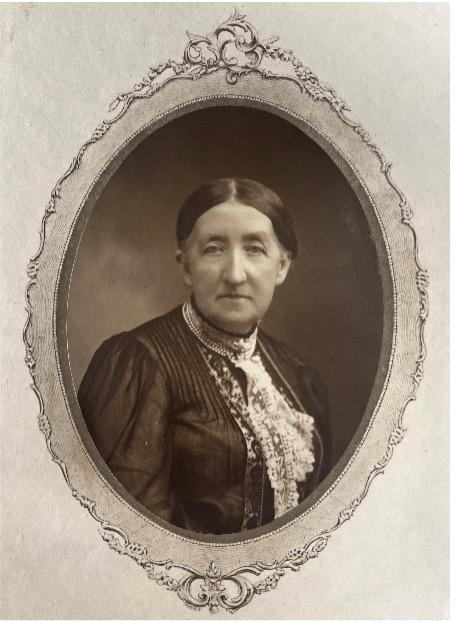
Lived: 1844–1930
Location: Bodelwyddan Castle and Plas Rhianfa, North Wales. Claydon house, Buckinghamshire.
Key role: Author, historian and educational promoter.
Key Information: Prominent figure in the local community, with personal endeavours and achievements such as publishing own works. Key roles and involvement in the early development of Bangor University, such as being a member of the university court 1894-1922 and junior deputy chancellor in 1919. Educational campaigner of higher education and education for girls in Wales.
Lady Margaret Verney was a prominent educational campaigner, author and historian. Descending from an aristocratic family in North Wales, this blog will explore her the life and achievements. Doing so through the three identities that can be attributed to her and the links to three important country houses. Discovering her early life at Bodelwyddan castle through the diaries of her childhood. Then exploring her authorship and links to her husband’s estate of Claydon House. Finally, her role in educational promotion and involvement in Bangor University, as she was heiress to Plas Rhianfa on Anglesey. This project will shine a light on her and celebrate her individual achievements, whilst also opening discussion for women’s history in general and refocussing on the often-forgotten stories of remarkable women of the past.
The Diarist of Bodelwyddan
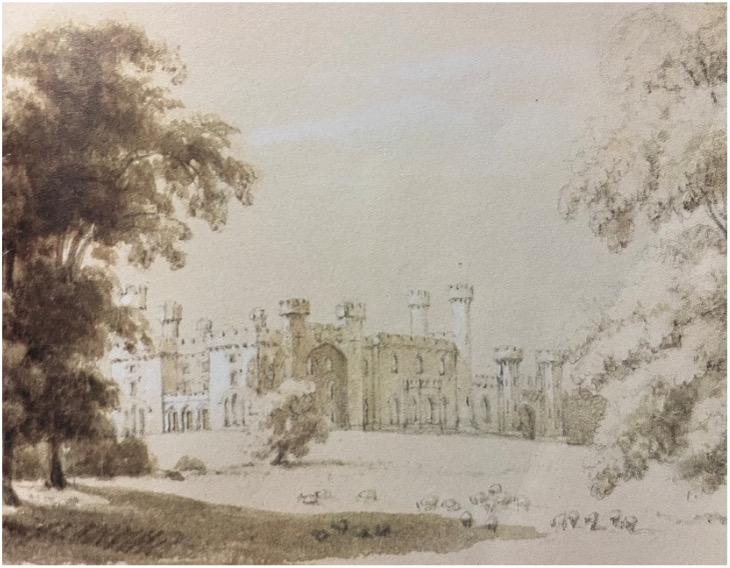
Lady Margaret Verney was born Margaret Maria Hay Williams on 3rd December 1844, into an elite landed family in North Wales, her father being the 2nd baronet of Bodelwyddan.1 The family was prominent and well established within the local area, owning not only Bodelwyddan estate, but also Plas Rhianfa on Anglesey. The Bodelwyddan estate passed to the Williams family around 1690, with Sir William Williams changing the appearance dramatically and the estate switched to a landowner income in 1788.2 Margaret descended from an elite and well-connected family, her father John Hay Williams inherited the estate in 1830, and her mother was the daughter of Earl Amherst. Living with her parents and sister Maude, she grew up within the landscape of North Wales. Spending much of her early life between London and their North Wales homes, partaking in many differing activities, her childhood was typical of a nineteenth century aristocratic lifestyle.
Much of her childhood is known and displayed due to the extensive daily diary entries which she recorded between the ages of 9 and 12 in the years 1854-7.3 Her time in Bodelwyddan was spent receiving relatives and socialising, such as her cousin Herietta’s visit in October 1854, where she describes ‘Having had company for so long we are glad to be alone again’.4 Visiting other notable houses, such as Plas Newydd and Penrhyn Castle were also frequent. There is mention of a tour around North Wales, as she records ‘We are now going to Rhianva for a week and from there a tour of the mountains’, which further details visits to Snowdonia, notable places such as Beddgelert and Dolbadarn castle.5 The entries discussing North Wales provide key insights into the relationship and ties to this location, we sense she had a fondness for this area and Bodelwyddan.
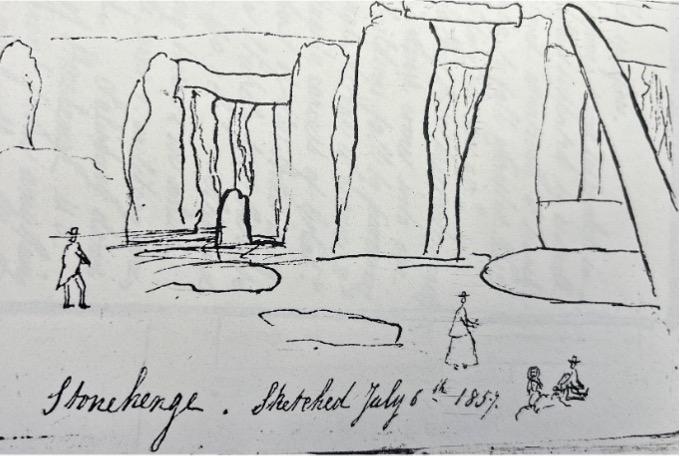
Her diaries also contain information about her time in London and the many different pursuits which were enjoyed such as trips ‘to the zoological gardens’ and sightings of the royal family.6 Other mentions of sightseeing trips to museums, historic sites and time spent attending balls and painting. She also goes on a tour of historic sites of England, most notably Stonehenge, with drawings included. Her later diary entries focus on her attending the dance academy and Polytechnic. The diaries give an idea of the society that she is growing up in and the experiences that she is exposed to that shape her. It can also be used to view the relationship between Margaret and her family members such as her sister Maude and parents, who she appears to have a close relationship with. Margaret’s personal interests can be explored due to her references to literature and history, such as Edward I’s conquest of Wales, which are useful as they provide a foundation which informs her later works. These entries provide a direct view of her life and the changes in her writing and education can also be observed. Overall, we get the impression that Margarets childhood at Bodelwyddan was a positive one, as she records that ‘today we are going home to dear Bodelwyddan’ and ‘we are again settled in Bodelwyddan in peace and happiness’.7 The diaries allow a window into the mind of a nineteenth century child, viewing her thoughts directly as she wrote them as well as the elite society in which she was raised.
Sources


These documents are highly useful in being able to understand the early life of Margaret and childhood of a nineteenth century aristocrat growing up on a landed estate such as Bodelwyddan. Further analysis can allow for the understanding of her family dynamic and relationships with her parents. She does spend periods of her time away from her parents, often her father, although we get the impression that she had a positive relationship with both. We hear how ‘mama took the company to South Stack. We had luncheon at the cottage again’, which suggests it is a frequent habit to be separated.8 There are often occasions when her parents would be away for longer as Margaret notes ‘mama and papa went away this afternoon to Plas Newydd where they are to stay for two nights’.9 Margaret and her sister were often removed from social situations or excluded due to age. She also records how she was able to join them, ‘after the grown up people had had their dinner’.10 It would be expected that nineteenth century children would be separated from the adult activities, which is clearly the case in Margaret’s diaries. However, we still understand that she did spend a significant time with both parents, which resulted in a good relationship.
Her family were well respected and established in the area, cultivating close links and ties to the community. However, during her coming-of-age ceremony we see some conflict, with little effort given to commemorate the milestone and local workers refusing to attend, giving the excuse that they were ‘too old to expect any more favours’.11 Despite this lapse in popularity and good-feeling, Margaret’s later years bridged this rupture due to her community presence and later educational work. The theme of religion is also prevalent throughout the diaries, as we see that she attends sermons in both Anglesey and London, suggesting that this is an important focus in family life and informed by societal expectations. The progress of her opinions on religion are seen, as she describes early how ‘we went to Beaumaris church, the curate preached a beautiful sermon’. Later, she describes how she cannot call a sermon ‘beautiful, it was such an awful subject’, displaying her views.12 These diaries provide in-depth details in which the wider societal themes and expectations can be studied, we are able to gain Margaret’s opinions and understand the subjects that are important to her.
The Author of Claydon House
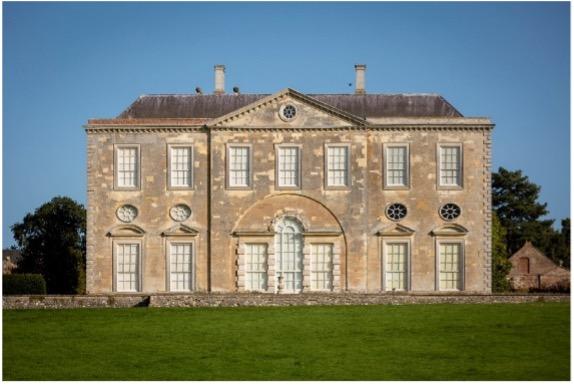
Margaret married Lord Edmund Hope Verney in 1868, the 3rd baronet.13 The Verney family inherited the Claydon estate in 1620, and were an established and well-connected elite family, which provided Margaret further connections with aristocracy. This marriage allowed her to pursue her historic and literary interests further. The Verney’s family seat of Claydon House contained a large quantity of family letters, diaries and documents within the estate’s archives, which had previously been accumulated by her husband’s stepmother Frances Parthenope for publication. Margaret set about completing this task and contributing to the genealogical studies of her husband’s family. She finished much of her predecessor’s work facilitating the publication of the two volumes of Frances previous attempts. They produced detail family history during the seventeenth century, with the first two volumes being entitled Memoirs of the Verney Family: During the Civil war, both published in Frances’ name, Margaret’s addition of a preface in volume II makes clear her involvement in facilitating the publication of the earlier volumes in 1892.14 Margaret’s own volumes were later published in 1894 and 1899, the third volume was entitled Memoirs of the Verney Family: During the Commonwealth 1650-60.15 The fourth and final volume was entitled Memoirs of the Verney family: Restoration to the Revolution 1660-1696’16 Interests in genealogy and history were commonplace among the nineteenth century aristocracy, although women’s involvement in the field was rare, making these women’s achievements more notable. Around 30,000 documents were consulted in the writing and editing process, therefore the publishing of these documents demonstrates her passion and enthusiasm for historic writing and act as an impressive achievement and reminder of women’s contributions in nineteenth century publishing.17
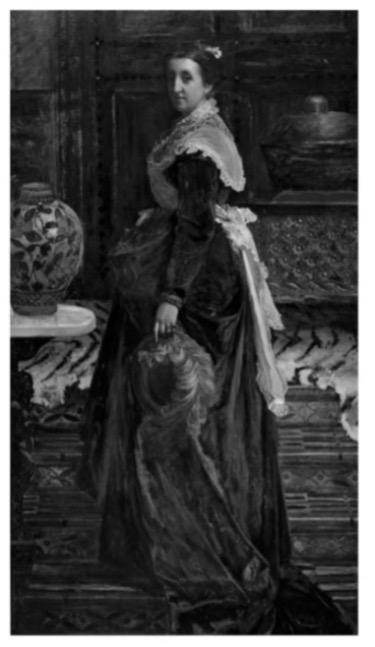
Her later life saw the publication of further Claydon house history, with the two volumes of Verney Letters of the Eighteenth Century from the MSS. at Claydon House in 1930.18 This demonstrates a lengthy dedication to this project and lifelong interest. These literary works were received positively and proved a successful venture, that they were reprinted years later. The publishing of them was a great achievement and not commonplace for women at this time, and so this accomplishment must be celebrated.
Sources

Verney Memoirs, Vol. III
Margaret M. Verney, Memoirs of the Verney Family: During the Commonwealth 1650–1660, Vol. III (London, 1894)


Verney Letters
Margaret M. Verney, Verney letters of the eighteenth century from the mss. at Claydon House, Vol. I (London, 1930)

The publishing of the Verney memoirs were not her only venture into the literary world, as she published multiple other works, such as the ‘Bucks Biographies’ for the Buckinghamshire Education Committee in 1912.19 This volume details the counties history, spanning from the Anglo-Saxons to the 19th century. It provides a basis knowledge of local figures throughout history for the children of the county, indicating her knowledge and interest in historical literature further, but also her involvement in education. She went on to publish many other literary works and biographies. Lady Margaret Verney’s publishing and literary projects highlight her as an incredibly accomplished woman but also demonstrate the contributions and importance of nineteenth century aristocratic women more widely.
The Educational Promoter of Plas Rhianfa
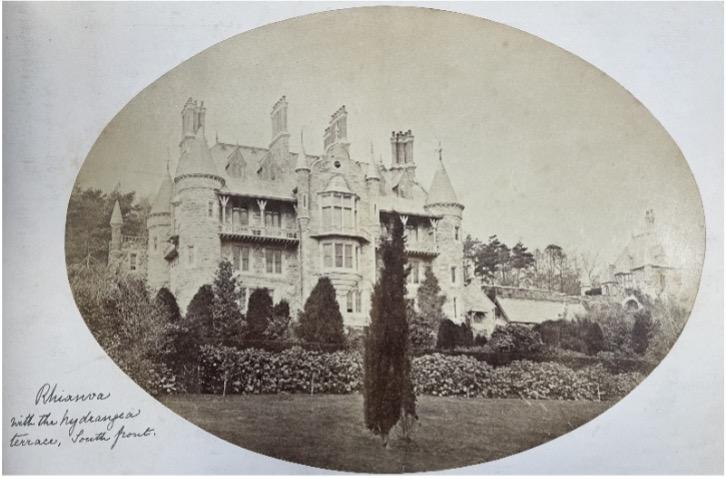
Lady Margaret Verney became a prominent local figure in North Wales, as the heiress of Plas Rhianfa on Anglesey, she was perfectly placed for involvement in local causes. The building of Plas Rhianfa by her father, was intended to provide a home for his widow and daughters after his death, as Bodelwyddan estate passed to the nearest male heir. The building began in 1849, with the name ‘Rhianfa’ meaning ‘Ladies abode’.20 It was built in the French chateau style designed completely by Sir John and Lady Sarah. Taking inspiration from French design, it also used local materials, with motifs and symbols of Wales.21 The house was designed to be prominent on the Island, sitting on the Menai Straits, it was placed to look over onto the mainland, whilst incorporating the local community at its heart.
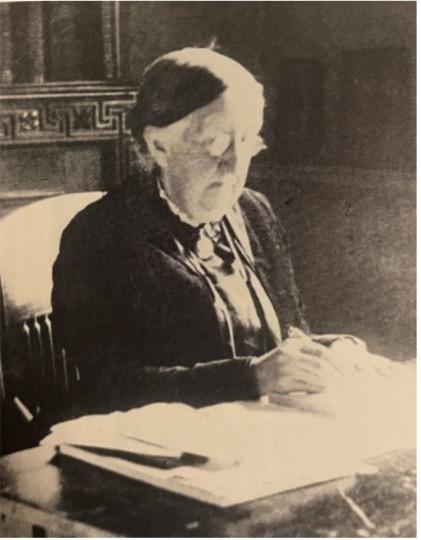
Taking great involvement in the promotion of higher education and more widely the education of girls in Wales. Margaret’s involvement in the early development of Bangor university was hugely significant. Having been enrolled previously in the institution, such as many aristocratic local families did, she nurtured links with the university from its early days. She was the first woman to be placed on the council, becoming an active member of the University of Wales Court from 1894-1922, demonstrating key involvement from the very beginning.22 She was also appointed the junior deputy chancellor of the university in 1919, becoming again the first woman to serve in this role.23 Also becoming a representative on the court of the National Library of Wales and Bangor council.24 She became integral to the development of higher education in North Wales and the country more widely. Although, the promotion and patronage of university education was incredibly important to Margaret, it was the campaigning for women’s education that inspired her the most, becoming her main cause of involvement. She undertook the presidency of The Association of the Promotion for the Education of Girls in Wales, becoming a key figure in campaigning for women’s access and involvement in the educational sphere. She was also the ‘hon. secretary of girls scholarships’ at Bangor university, and after her death a scholarship fund was set up in her name, indicating her importance and impact within the University.25 The role she played in educational promotion was incredibly important, bringing to light many of the issues she saw with the availability and provision of learning.
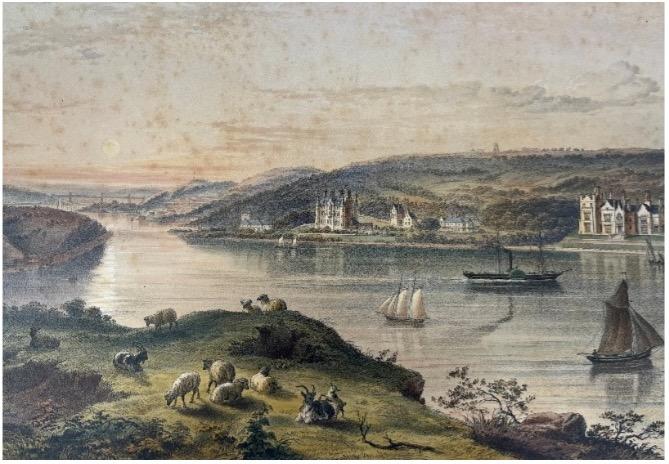
Plas Rhianfa provided a continuous platform from which she could play a large and prominent part in society. Furthermore, to her importance to local education, she also acted as important local figure with involvement in local events and displays. Her involvement in the 1906 Llandegfan flower show, in which Mr Edwards, the headmaster of the council school, described her as ‘the qualities of an old Welsh family with these of a highly cultivated lady in the forefront of all modern movements towards enlightenment and progress’ indicates this.26 This is also seen as she gave a speech at the opening meeting of the parish hall in 1904.27 Although a busy woman, she managed to find time to show appreciation and involvement within her local parish, which was kindly received by many. Through these newspaper snippets we can understand that she was a much-valued member of society and well respected. Showing her support for the wider community is also evident in the political involvement that she showed. Campaigning for her husband and son’s political ambitions and liberal cause.28
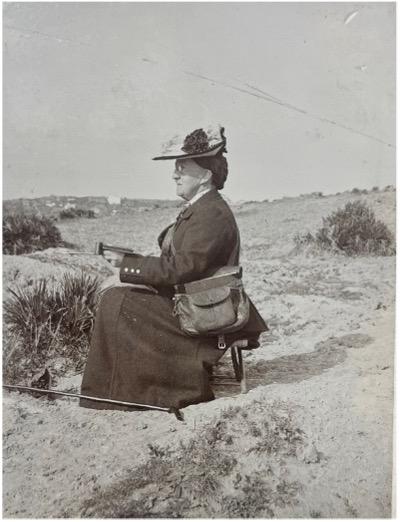
The ability to establish herself in the community and create a stable and respectable name and legacy is integral to the understanding of Margaret’s character. This is evident after her husband’s disgrace in 1891, which resulted in a criminal conviction for the pursual of an underaged girl.29 Resulting in him being removed as an MP and socially disgraced. Within this turmoil she was able to continue her own pursuits and establish herself academically and professionally, despite her husband’s misdemeanour and criminal activity. The newspaper article that details her husband’s court trial, Margaret ‘is described as one of the purest, gentlest, sweetest of women’.30 This suggests that she was still respected and not as socially scarred or overshadowed by her husband’s misdemeanours in society as you may expect. She was able to pursue her own successes and leave an incredibly positive legacy in her own name.
Sources

Plas Rhianfa
Sarah Hay Williams (from the diary of), Plas Rhianfa: A Short History, Bangor University

Scholarship Association
The North Wales Scholarship Association: Report of the Fourth Annual Meeting, 2 July 1884, Bangor
Final Thoughts
Margaret’s life is one filled with achievement and success within an aristocratic society. Hailing from a landed family in North Wales, she developed a fondness for the area which would follow her throughout her life. Her early life prepared her for the entering into this elite society with Bodelwyddan playing a major part in her upbringing. She was highly accomplished, with her utilising her husband’s estate and archives to pursue the publication of her own work, whilst also contributing to literature more widely. Her legacy is still felt in North Wales, where her contribution to Bangor University and the roles she filled provided key development, and her campaigning for women’s education highly significant. A new light must be shone on Margaret’s life to truly understand and celebrate her achievements and begin to open discussion of women’s contributions throughout history.
Links to Similar Projects
Further Reading
Evans, A. S. and R. F. Sandham, Bodelwyddan Castle: A brief history (Bodelwyddan Castle Trust).
Evans, S., Coming of Age Celebrations on Welsh Landed Estates: Gentry, Culture and Society, c.1770–1920 (Martlesham, 2025).
Huff, C., British Womens Diaries: A Descriptive Bibliography of selected nineteenth century womens manuscript diaries (New York, 1985).
Rees, L. A., ‘ ‘‘I serve my God, and I fear not man’’: The Rebecca Riots and a female landowner’s response to Welsh Rural Protest, 1843-44’, in Terence Dooley, Maeve O’Riordan and Christopher Ridgway (eds), Women in the Country House in Britain and Ireland (Dublin, 2018) pp. 186–99.
Morris, R. J., Men, Women and Property in England, 1780–1870 (Cambridge, 2005).
Reynolds, K. D., Aristocratic Women and Political Society in Victorian Britain (Oxford, 1998).
Williams, J. G., The University College of North Wales: Foundations 1884–1927 (Cardiff, 1985).
References
1 H. E. D. Blakiston, ‘Verney [nee Hay Williams], Margaret Maria, Lady Verney’, Oxford Dictionary of National Biography, online edn Verney [née Hay Williams], Margaret Maria, Lady Verney (1844–1930), historian and promoter of higher education in Wales | Oxford Dictionary of National Biography (accessed 15 November 2025).
2 A. S. Evans and R. F. Sandham, Bodelwyddan Castle: A brief history (Bodelwyddan Castle Trust)
3 Diary of Margaret Maria Hay Williams (Aged 9 years old. Vol. I) of Bodelwyddan, 1854, Bangor University Archives 26565-26567.
4 Ibid.
5 Ibid.
6 Ibid.
7 Ibid.
8 Journal of Margaret M Hay Williams (Aged 12 years old. Vol. II) of Bodelwyddan, 1857, Bangor University Archives 26565-26567.
9 Ibid.
10 Journal of Margaret Hay Williams (Aged 12 ½ years old. Vol. III) of Bodelwyddan, 1857, Bangor University Archives 26565-26567.
11 S. Evans, Coming of Age Celebrations on Welsh Landed Estates: Gentry, Culture and Society c.1770–1920 (Martlesham, 2025), p. 181.
12 Journal of Margaret Hay Williams (Aged 12 ½ years old. Vol. III) of Bodelwyddan, 1857, Bangor University Archives 26565-26567.
13 Blakiston, ‘Verney [nee Hay Williams], Margaret Maria, Lady Verney’.
14 Frances Verney Parthenope, Memoirs of the Verney Family: During the Civil war, Vol. II (London, 1894).
15 Margaret, M. Verney, Memoirs of the Verney Family: During the Commonwealth 1650–1660, Vol. III (London, 1894).
16 Margaret, M. Verney, Memoirs of the Verney family: Restoration to the Revolution 1660–1696’, Vol. IV (London, 1894).
17 Blakiston, ‘Verney [nee Hay Williams], Margaret Maria, Lady Verney’.
18 Margaret M. Verney, Verney letters of the eighteenth century from the mss. at Claydon house, Vol. I (London, 1930).
19 Margaret M. Verney, Bucks Biographies (Oxford, 1912).
20 Sarah Hay Williams (from the diary of), Plas Rhianva: A short History, Bangor University Archives, p. 2.
21 Ibid., p. 2.
22 J. G. Williams, The University College of North Wales: Foundations 1884–1927 (Cardiff, 1985) p. 78.
23 Ibid., p. 78.
24 Blakiston, ‘Verney [nee Hay Williams], Margaret Maria, Lady Verney’.
25 The North Wales Scholarship Association: Report of the Fourth Annual Meeting, 2nd July 1884, Bangor.
26 Landegfan Parish Book, Bangor University Archives.
27 Ibid.
28 Blakiston, ‘Verney [nee Hay Williams], Margaret Maria, Lady Verney’.
29 'Captain Verney: It was his wife’s money he squandered', Evening Express, 8 May 1891, accessed via Welsh Newspapers Online.
30 Ibid.
(Authored by Issy Marston)