
Scientists have harnessed an unlikely natural laboratory, the soil mounds thrown up by burrowing rodents to model and predict the future of the Tibetan Plateau’s critically endangered alpine wildflower meadows. ` - offer a breakthrough in understanding how plant communities assemble after disturbance - with implications for conservation worldwide.
The Research
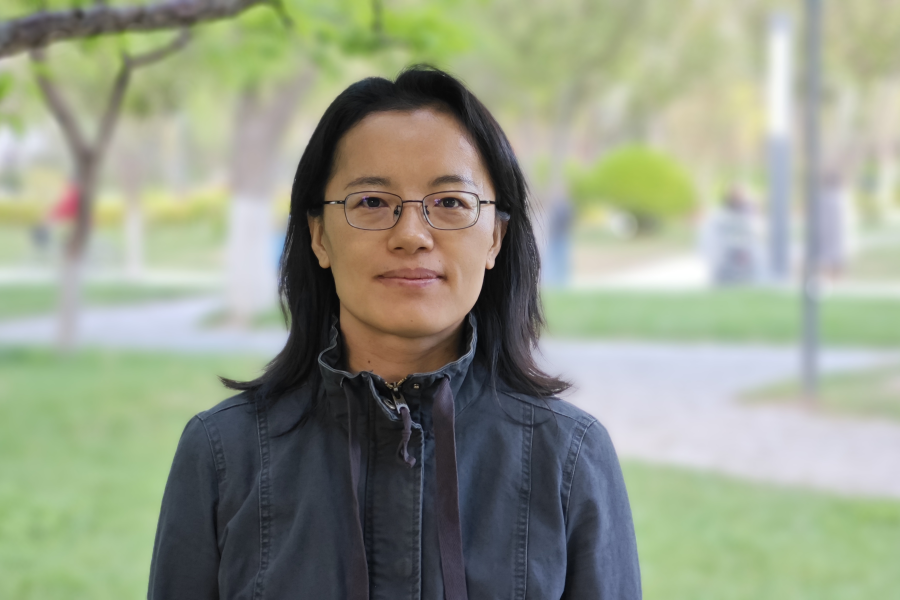
The study was led by Professor Dexiecuo Ai of Lanzhou University, China, and co-authored with Dr Farnon Ellwood, Senior Lecturer in Ecology & Conservation from Bangor University. The international team also included Professor Wenjin Li (Lanzhou University) and Professor Annete Ostling (University of Texas at Austin).
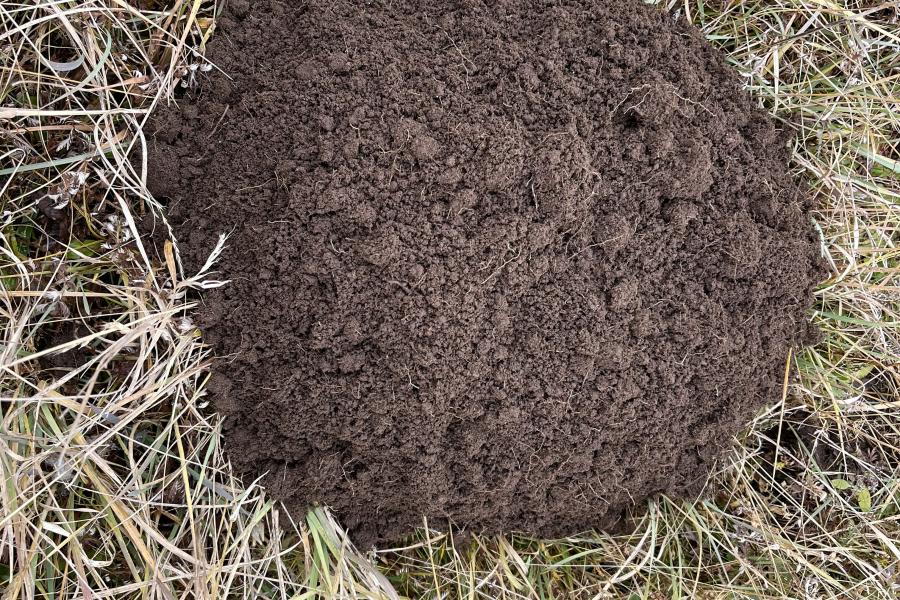
The team focused on zokors, burrowing rodents native to China, Kazakhstan and Siberian Russia. As zokors dig for tubers and seeds using their powerful front claws, they create mounds of fresh soil that are rapidly colonised by plant species. Because these mounds are abundant, uniform and naturally replicated, they serve as an ideal model system for studying how plant communities rebuild themselves after disturbance.
Using the mounds as their laboratory, the researchers developed a cohort-based plant succession model that tracks groups of plant species from seed dispersal through germination to maturity. The model captures the full seasonal rhythm of alpine meadow plants, which generate seeds in spring, summer and early autumn, then die back or hibernate in winter, making it well-suited to a discrete-time approach.
Why It Matters
Secondary succession, (the process by which bare or disturbed ground is recolonised by plants) is central to the restoration of damaged ecosystems. On zokor mounds, this process unfolds over just a few years, making it far faster and easier to study than succession on abandoned agricultural fields (which typically takes a decade or more) or in forests (which can take several decades).
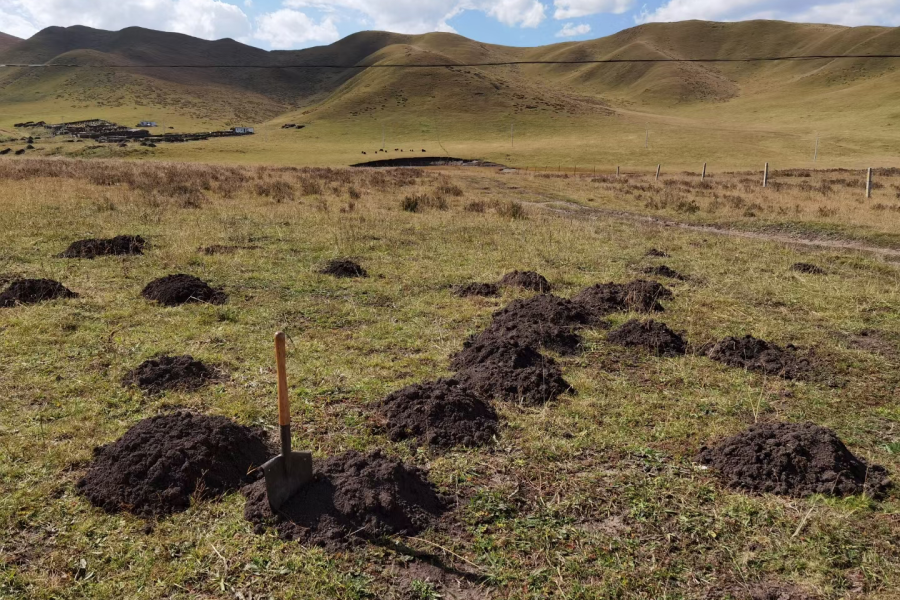
For the first time, the new model separates stochastic processes, such as the random dispersal of seeds, from deterministic processes, such as soil compaction driven by environmental conditions. This distinction has allowed the team to rewrite the “assembly rules” that govern how plant communities form and stabilise.
Dr Farnon Ellwood, Senior Lecturer in Ecology & Conservation, Bangor University said: “Our model incorporates plant reproduction and growth on soil mounds, with resource consumption depending on the environmental conditions within the soil mound. Environmental conditions are of the utmost importance to plant succession, with deterministic processes generated by environmental conditions leading to a competitive advantage for some species. Sure enough, our model was able to predict which plant species would be filtered out during succession, and which species [e.g. Potentilla anserina Linn.] would be able to adapt to the changing environmental conditions and therefore persist. Our model also predicts declining biomass with increased disturbance during succession.”

Broader Impact
While the study has immediate relevance for the conservation of the Tibetan Plateau — home to some of the world’s most biodiverse and threatened alpine ecosystems — the researchers believe its applications extend far beyond the region. The model is designed to be universally applicable, offering a new tool for predicting how plant communities across the globe may respond to ongoing environmental change.
Dr Farnon Ellwood adds: “The exciting thing about this study is that we were able to separate stochastic [e.g. dispersal] processes from deterministic [e.g. soil compaction] processes for the first time and in doing so re-write the assembly rules of secondary plant succession. Understanding the assembly rules of wildflower meadows will of course facilitate the conservation of the Tibetan Plateau, but this model will also have universal applications for understanding the fate of the world’s plant communities in the face of global environmental change. And all this is thanks to the burrowing activities of some adorable creatures able to make a molehill out of a mountain.”
Professor Dexiecuo Ai, Lecturer in School of Life Sciences, Lanzhou University China said: "We present a cohort-based model of disturbance and succession in herbaceous plant communities, where time-varying environmental changes and stochastic processes jointly drive succession. The model can predict plant succession on mammal-created soil mounds."