
Research warns changing climate may influence risks from deadly rodent-borne diseases
Changes in rainfall can trigger increases in rodent populations and subsequent spikes in infection, new research has found.
Dr Lucinda Kirkpatrick from Bangor University, whose work focuses on animal responses to environmental change, is a co-author of the study, published in Proceedings of the National Academy of Sciences, which reveals how a changing climate could have consequences for human health.
The research, led by Dr Gregory Milne (Natural History Museum, London) and Dr Lauren Attfield (University of Oxford) with collaborators at Bangor University, University College London and other institutions, involved developing a modelling framework using almost 30 years of data on the Natal multimammate mouse (Mastomys natalensis), a widespread African rodent and the principal reservoir of Lassa virus.
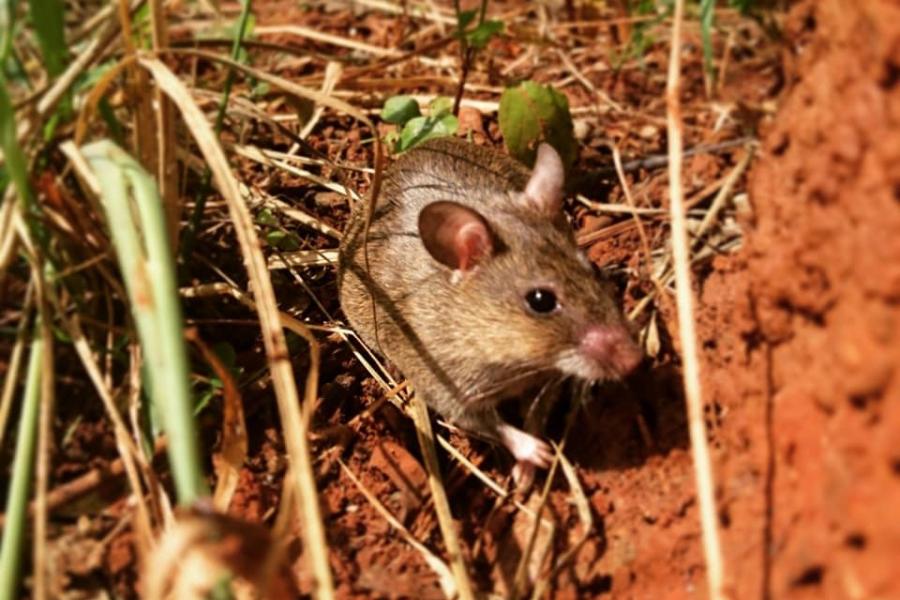
Since 1994, the University of Antwerp has been collecting data on the capture and recapture of this mouse: this is the longest-running study of its kind, yielding unique data. When tested against more than 6,000 recorded Lassa fever cases in Nigeria, the model accurately predicted the seasonal timing of outbreaks, suggesting it could help scientists identify periods of heightened disease risk.
Lassa fever is a rodent-borne zoonotic disease (an infectious disease that can spread naturally between animals and humans) endemic to West Africa.
Humans can become infected through contact with infected rodents or food and household items contaminated by their urine or faeces. Severe cases can be fatal. Understanding the environmental conditions affecting these animals is therefore important for identifying when the risk of disease spillover may be greatest.
Using more than 20,000 rodent captures from Tanzania alongside climate and pathogen exposure data, the researchers found that rainfall was a key driver of rodent populations, with wetter conditions likely increasing food availability and stimulating breeding.
Dr Lucinda Kirkpatrick, a Lecturer at Bangor University who is affiliated with Antwerp University, said, “Detailed, long-term datasets are critical for driving incredible breakthroughs in modelling, but we cannot take the existence of this data for granted. The foundation of this new framework is a 30-year dataset of unique resolution from the tropics, a region heavily burdened by disease yet chronically under-represented in long-term research.
“As our global ecosystems undergo rapid change, these multi-decadal field studies are more crucial than ever. Generating them, however, requires an immense, ongoing financial and logistical commitment. If we want to keep building these innovative frameworks that are crucial for understanding our rapidly changing world, we must urgently prioritise funding for the long-term fieldwork that is needed.”
Dr Gregory Milne, postdoctoral researcher at the Natural History Museum, who co-led the study, said, “The planetary emergency is changing the conditions in which people, wildlife and pathogens interact. To understand what that means for human health, we need to understand the ecological processes connecting environmental change to disease.
“Our research shows how changes in rainfall can drive rodent population booms and influence infection, helping explain why disease risk varies over time. When we applied the model to Nigeria, the timing of peaks in infected rodents closely matched the seasonal timing of human Lassa fever outbreaks.
“Understanding how environmental change affects wildlife populations is essential for anticipating future zoonotic disease risks, and could help scientists and public health authorities identify periods of heightened risk.”
The researchers also found that the virus could persist in rodent populations by passing from mothers to their offspring. Their model estimated that almost 80% of infected pregnancies resulted in this form of transmission, helping the virus survive between breeding seasons.
The researchers tested whether their model, built using data from Tanzania where Lassa fever is absent but the multimammate mouse present, could help explain outbreaks in West Africa. Using climate data from five Nigerian states, they compared its predictions with more than 6,000 confirmed Lassa fever cases recorded by the Nigerian Centre for Disease Control and Prevention between 2018 and 2025.
Peaks in infected young rodents tended to occur around a month before peaks in human cases. In 83% of comparisons, the predicted peak in infected rodents and observed peak in human cases were within 28 days of each other.
The model could often predict the timing of outbreaks, but not their size, which is likely to depend on other factors including human behaviour, contact with rodents and disease surveillance.