

Dr Ronan Roche from the School of Ocean Sciences helped shape international discussions at the United Nations Climate Change Conference (COP). This followed the release of the first global assessment of coral reef ecosystems using the International Union for Conservation of Nature (IUCN) Red List of Ecosystems framework.
Presented to policymakers and international delegates at COP, the findings revealed that 122 of the world's 127 assessed coral reef ecosystems (96%) are classified as Critically Endangered, placing them at extremely high risk of collapse by 2075 unless urgent action is taken to tackle climate change and reduce local pressures on reef environments.
The assessment brought together more than 250 experts from around the world and represents the first comprehensive evaluation of coral reef ecosystems across more than 80 countries and territories. The research was coordinated by IUCN, the University of Melbourne and CORDIO East Africa through the Global Coral Reef Monitoring Network.
Ronan played a key role in the international project, contributing expertise to the assessment of coral reef ecosystems and helping develop evidence that is now informing global discussions on marine conservation, climate resilience and biodiversity protection.
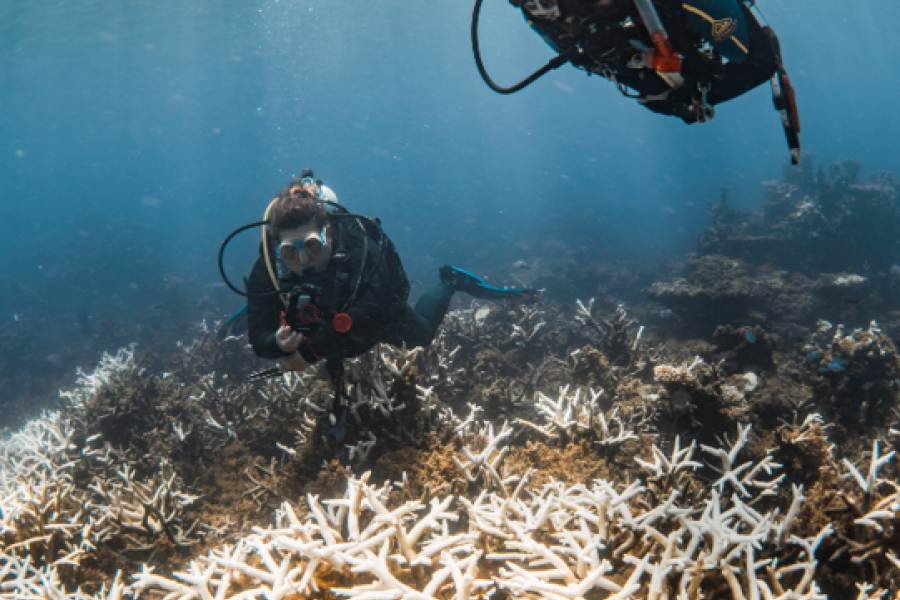
Commenting on the work Ronan said "This assessment provides the clearest picture yet of the condition of coral reef ecosystems globally and the risks they face in the coming decades. Coral reefs support extraordinary biodiversity and provide food security, livelihoods and coastal protection for millions of people around the world.
"The findings are concerning, but they also show that there is still time for action. Reducing greenhouse gas emissions remains essential, but local conservation measures such as protecting key fish populations, reducing pollution and improving management of marine ecosystems can significantly improve reef resilience and recovery potential."
The assessment examined 188,362 square kilometres of coral reefs across tropical and subtropical regions and found that coral reef ecosystems in some of the world's most iconic marine environments, including the Great Barrier Reef, the Coral Triangle, the Mesoamerican Barrier Reef and reefs of the Red Sea, are all now classified as Critically Endangered.
The study found that marine heatwaves driven by climate change represent the single greatest threat to coral reefs worldwide. As ocean temperatures rise, bleaching events are becoming more frequent and severe, leaving reefs with less time to recover between episodes of extreme heat.
While 96% of coral reef ecosystems are projected to become Critically Endangered when future climate warming is considered, only 24% currently meet that threshold based solely on observed changes over the past 50 years. This highlights the significant difference that ambitious climate action and targeted conservation measures could still make.
Coral reefs occupy less than one per cent of the ocean floor yet support around a quarter of all marine fish species. They also play a critical role in supporting fisheries, tourism, coastal economies and the protection of communities from storms and erosion.
The assessment identified climate-driven heat stress as the dominant threat, with 95% of coral reef ecosystems projected to face Critically Endangered status due to future marine heatwaves alone. Additional pressures including overfishing, pollution, coastal development and habitat degradation are further reducing the ability of coral reefs to recover.
Importantly, the research also identifies areas of resilience where reefs have demonstrated a greater capacity to withstand environmental change. Regions such as parts of the Northern Red Sea, Papua New Guinea and Bermuda may provide valuable insights into how conservation efforts can support reef survival in a warming world.
The findings will help governments, conservation organisations and international agencies target action where it can have the greatest impact, providing a shared scientific baseline for future policy development, restoration initiatives and biodiversity commitments.
Professor Stuart Jenkins, Head of the School of Ocean Sciences at Bangor, said:
"Bangor University has a long-standing reputation for world-leading marine science and conservation research. Ronan's contribution to this landmark global assessment demonstrates the University's commitment to generating the evidence needed to address some of the most pressing environmental challenges facing our planet. The fact that this work is informing discussions at COP underlines both its scientific importance and its global relevance."
The Red List of Ecosystems assessment is recognised as a key indicator within the Kunming-Montreal Global Biodiversity Framework and is expected to play an important role in shaping future international conservation strategies.
As world leaders gather to discuss climate and biodiversity action, the message emerging from the assessment is stark but clear: most coral reefs have not yet collapsed, but the window to protect them is rapidly narrowing.


