
Sker House Wins Prestigious RICS Award
Described as ‘one of the major Elizabethan houses of South Wales’, Sker House stands in isolation on a rocky promontory jutting out into Swansea Bay, about three miles from Porthcawl. The twentieth century was not kind to this building, and its condition deteriorated to such an extent that one wing completely collapsed. However, a turning point came in 1999, when the local authority and a building preservation trust stepped in to save it. Over the past twenty-five years, Sker has undergone a remarkable restoration and is once again in use as a private residence. In fact, it has been given a new lease of life with a distinctive yellow limewash. Earlier this month, the restoration project was recognised by the Royal Institution of Chartered Surveyors (RICS), when it was named the winner in the Welsh Heritage category of their annual awards. In this blog post, learn more about the history and significance of the house and the award-winning restoration project which saved it.
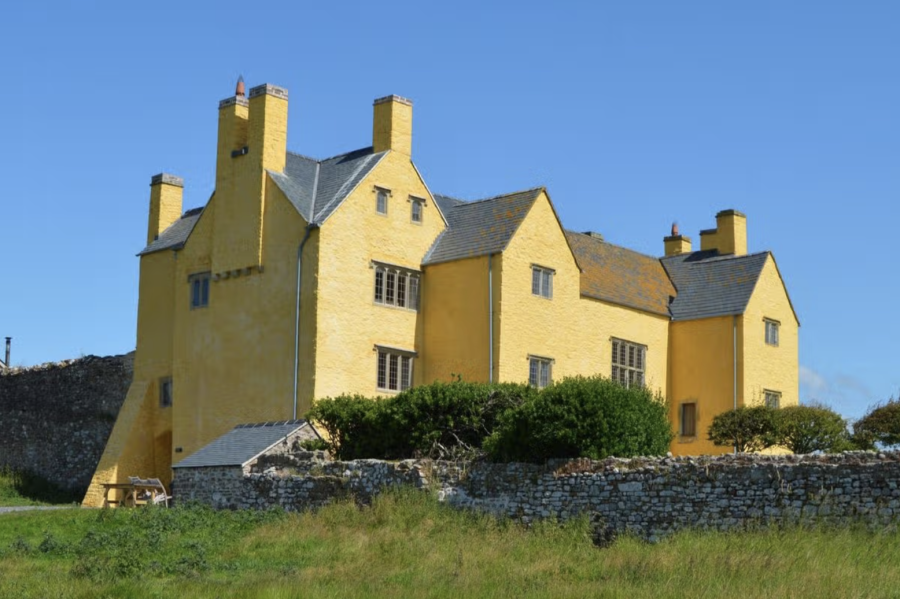
The history of this particular coastal site dates back to the twelfth century, when the Cistercian monastery at Margam Abbey established a monastic grange here, though it soon transferred to Neath Abbey in an exchange of land. Following the dissolution of the monasteries the grange passed into the private ownership and was transformed into a house.
For the second half of the sixteenth century and most of the seventeenth century, Sker was in the possession of the Turberville family. The present Sker House is the product of a major remodelling by Jenkin Turberville in the last quarter of the sixteenth century. This remodelling saw the addition of a second storey to an existing building, as well as the addition of several storeyed projections, including a stair tower, all of which give the house its distinctive multi-gabled appearance. The Turbervilles were well-known recusants, with several members fined and imprisoned; one member was even found guilty of harbouring a Jesuit priest here.
The Turberville family sold Sker House towards the end of the seventeenth century, when it passed to a succession of absentee landlords who rented it out to tenants. On the one hand, the fact that the house was under tenancy meant that it was never substantially altered nor modernised; on the other hand, without a resident landlord the condition of the house soon deteriorated.
The architectural and social significance of Sker House was formally recognised in 1952, when it was designated Grade I by Cadw. However, the private owner failed to maintain the building and it began to crumble. In 1999, Bridgend County Borough Council stepped in and issued a compulsory purchase order, transferring ownership to the Buildings at Risk Trust.
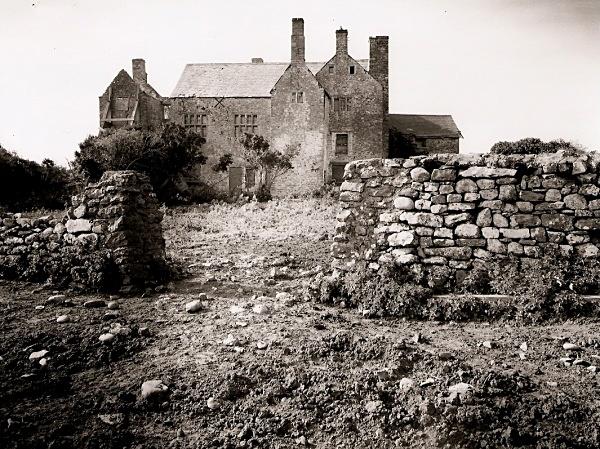
What followed was the major, £1.2 million restoration project across 1999–2003, which was supported by the Heritage Lottery Fund and led by local architecture practice Davies Sutton Architects. One of the key aspects of this project was the restoration of the late-sixteenth-century Great Hall on the first floor. This is a tall, impressive space complete with timber screen, canted plaster ceiling, and a frieze of dragons, birds, and bunches of grapes. It was also during this phase that Sker was limewashed yellow. According to conservation architect Michael Davies of Davies Sutton Architects, the project was purposely taken to “about 90% completion” in order to allow the prospective new owner to put their own stamp and finishing touches on the place.
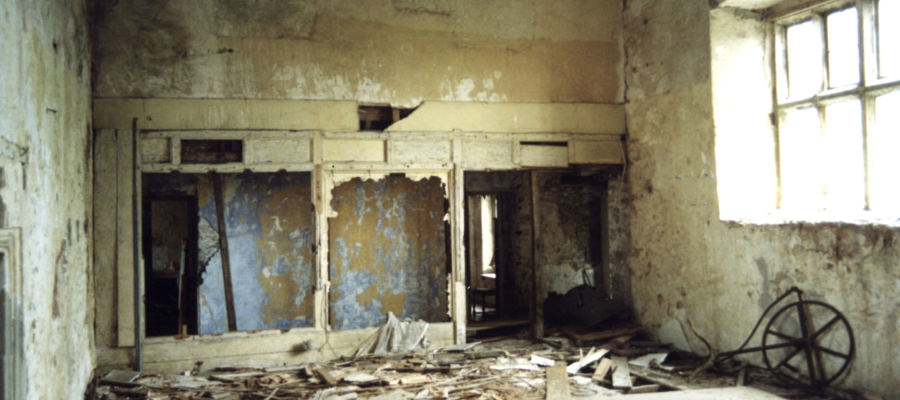
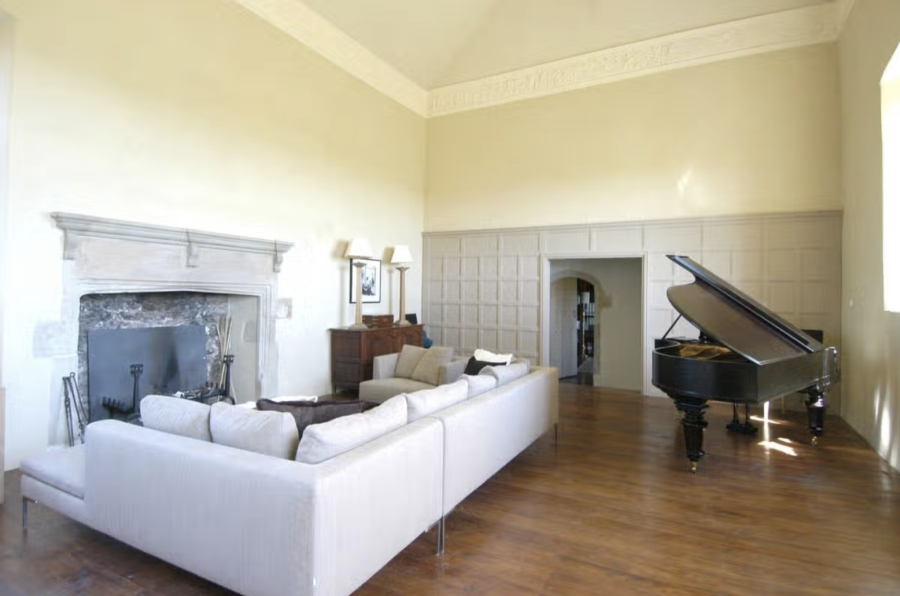
In 2003, Sker House was purchased by a British-American historian and academic. In 2024, he worked with Michael Davies and quantity surveyor James Christian from the construction and design consultancy RPA to transform the last ruinous wing of the house into an impressive three-storey library, thereby completing the restoration.
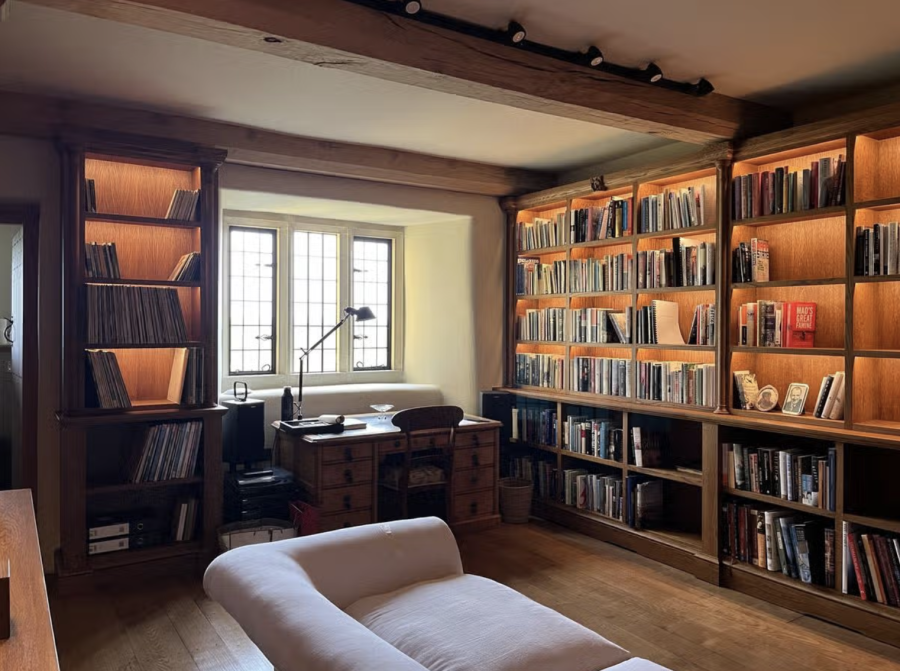
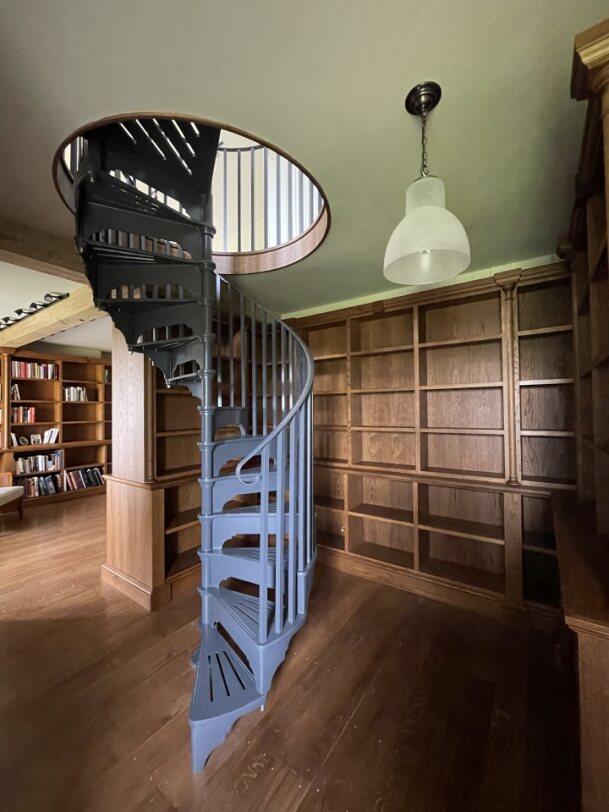
Now all of this hard work has been recognised with a prestigious award. Every year, the RICS UK Awards highlight the most inspiring people and projects shaping the built and natural environment. There is a special focus on the role of chartered surveyors in making these projects a reality. The awards commence at regional level, and the Wales Regional Ceremony was held in Cardiff on Wednesday, 8th July 2026. This year, the Heritage category included three impressive projects, namely Sker House, the Caerphilly Castle Regeneration Project, and Ruthin Clock Tower. While Caerphilly Castle was highly commended, Sker House took the award, and will now go forward to represent Wales at the RICS UK Grand Final in October 2026.
Sker House, in its isolated, romantic setting among the sand dunes, has been capturing the imagination of authors and artists for centuries. It served as the inspiration for R. D. Blackmore’s 1872 novel The Maid of Sker and Ronald Welch’s 1955 thriller novel Sker House; it even served as the setting for the 2020 video game ‘Maid of Sker’ and its sequel ‘Sker Ritual’. It’s wonderful to see Sker House restored to its former glory, continuing to delight and inspire, and now winning awards. We hope that it will serve as inspiration for similar restoration projects in Wales in the future.
(Authored by Dr Bethan Scorey)