

Professor Oliver Turnbull, from the North Wales Medical School and the School of Psychology at Bangor University, spent a week at Khmelnytskyi National University (KNU) as part of a scheme to strengthen academic partnerships between the United Kingdom and Ukraine.
He has been selected as one of only ten UK academics awarded a prestigious UK-Ukraine Visiting Professorship by the Fund of the President of Ukraine for Education, Science and Sports.
Bangor was the only university in Wales selected for the 2026 scheme. The partnership with KNU was established through a twinning agreement first signed in 2022 and renewed in 2025.
During the visit, Professor Turnbull delivered a range of academic activities at KNU, in western Ukraine, with students, academics, and clinicians, while also exploring opportunities for future collaboration in neurorehabilitation and medical education.
He also made an appearance on the Ukrainian television news channel, TV7+.
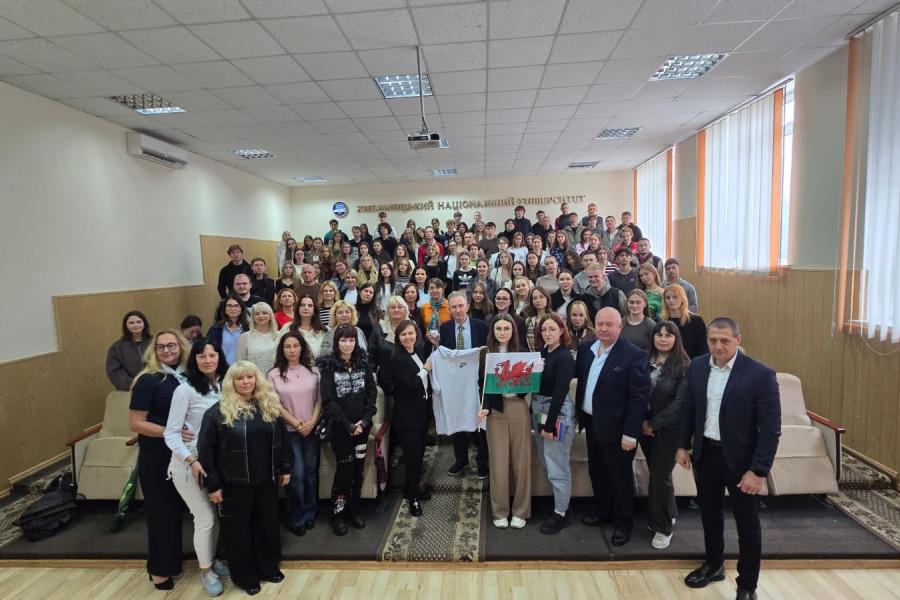
Professor Turnbull said, “Beyond its academic purpose, the evocative and deeply moving visit provided a powerful insight into life in the country. War was everywhere - an inescapable presence. Not always in dramatic ways, but in the details of daily life. The shelters beneath university buildings, the stories people tell, the absent faces, and the memorials that dominate public spaces. All serve as reminders that Ukraine continues to live with the consequences of conflict every day.
“The city of Khmelnytskyi bears visible reminders of the war's human cost, with large memorials honouring those who have lost their lives defending Ukraine, creating a striking presence in the city centre. Visitors also become aware of another, less obvious reality: the absence of many younger and middle-aged men.
“Under Ukraine's mobilisation programme, men are called to military service from their early twenties through to the age of 60, meaning families and communities experience separation and uncertainty. What began as an emergency has become a defining chapter in contemporary Ukrainian life, particularly for a generation of young people whose education has unfolded entirely under the shadow of conflict.”
Drawing on Bangor University's internationally recognised expertise in neuropsychology and neurorehabilitation, he visited specialist services supporting individuals living with the effects of military service and wartime trauma. The visit opened discussions about future academic and clinical collaboration with the University.
"The dedication of the staff, and their resilience, was remarkable," said Professor Turnbull. "The challenges they face are immense, but they have great determination to rebuild lives and futures."
The visit also highlighted the enduring cultural connections between Wales and Ukraine. During sessions with students and staff, Professor Turnbull introduced elements of Welsh language and culture, sharing basic Welsh phrases and discussing the importance of language, identity and heritage in sustaining communities during difficult times.
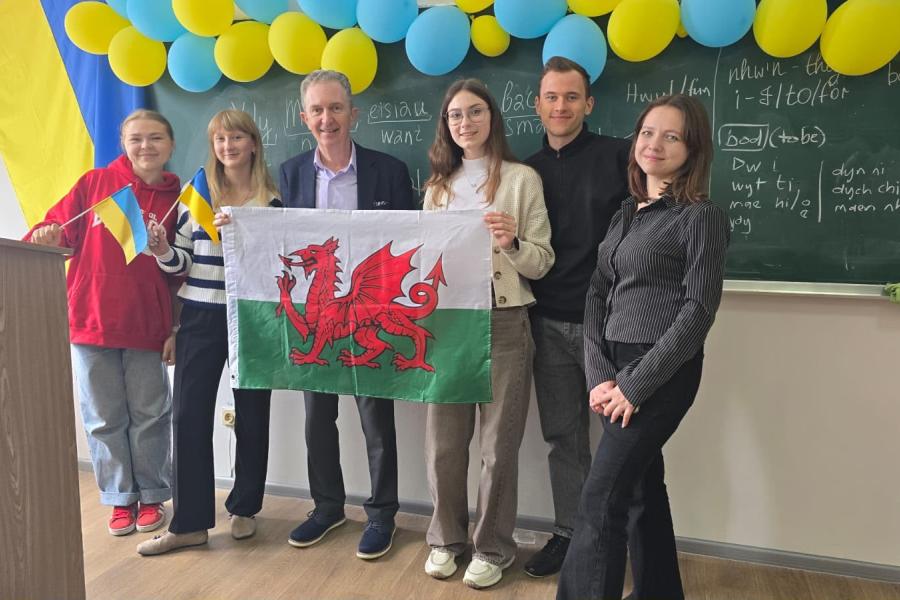
Professor Turnbull said, "The exchange of culture and ideas was particularly meaningful. When people are living through uncertainty, education becomes about much more than knowledge: as much about maintaining connections, preserving identity and creating hope. The enthusiasm and warmth shown by colleagues and students at KNU was unforgettable. Although Khmelnytskyi is considered one of the safer regions of Ukraine, the realities of war remained ever-present throughout the visit. Air raid procedures form a routine part of university life, and public buildings maintain access to bomb shelters as a matter of necessity.
He added, "The visit reflects Bangor University's longstanding commitment to international collaboration. It was a poignant reminder that academic partnerships matter not just in times of stability, but especially in times of adversity. I was proud to represent Bangor University and Wales, and to stand alongside our colleagues and friends in Ukraine."