

Background
Healthy pastures do more than feed cows — they support biodiversity, protect the climate, and sustain rural livelihoods. The HABITAT project - “Harnessing Pasture Biodiversity and Productivity” , explores how smallholder farmers in Kenya’s highlands manage their pastures, and how those choices affect biodiversity, livestock productivity, and greenhouse gas emissions.
By understanding the trade-offs and opportunities, the project aims to identify practical approaches that benefit farmers while also strengthening climate resilience and protecting nature. Led by a partnership between Bangor University, the International Livestock Research Institute (ILRI), and the University of Eldoret, and funded by the UK Government’s GCBC initiative, the project seeks to deliver real-world solutions for more sustainable livestock farming. The HABITAT project’s approach is a farmer centred model where knowledge and learning are farmer generated.
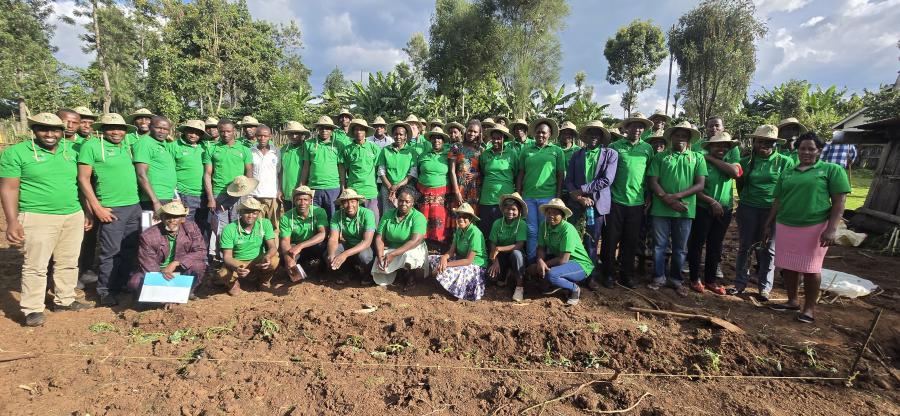
The first HABITAT Project On-Demand Training took place in Bomet county on 11th -14th November 2025. This training took place in two venues 11th – 12th November 2025: Kipleljin village, Bomet Central Sub-county 13th – 14th November 2025 at Richard Koske’s farm, and at Kapcholyo village, Sotik Sub- County at Martin Keter’s farm, facilitated by Emmaculate Kiptoo and Nathan Maiyo both of ILRI.
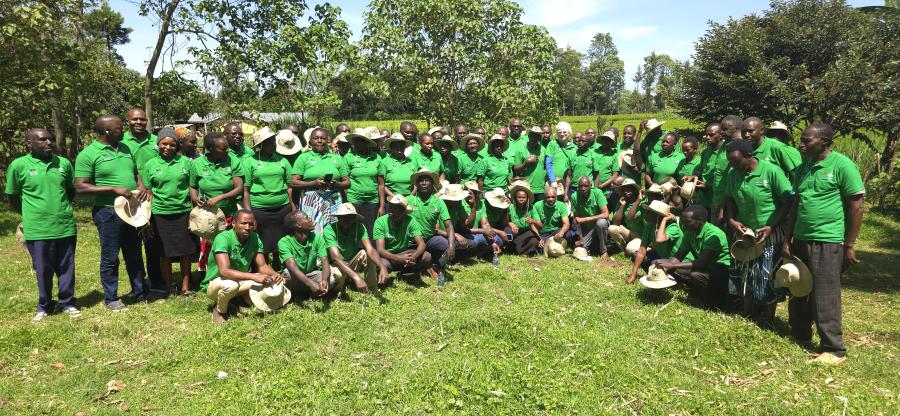
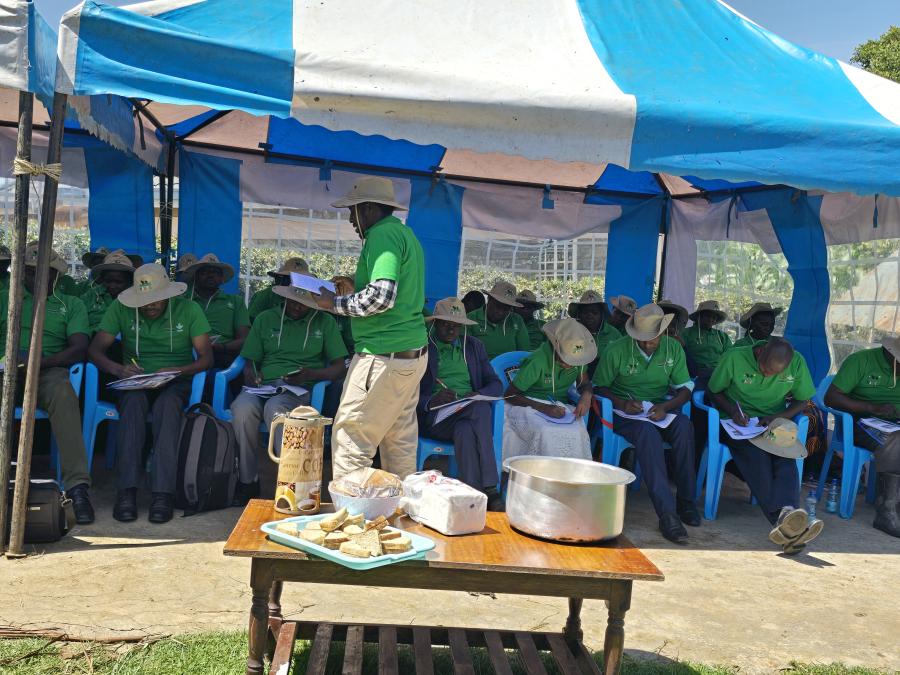
This training brought together farmers from all wards of Bomet County with 140 farmers attending. The notable aspects about the training design is the local farm setting and the unique GESI approach, where the household head attended with the spouse and other family members to increase impact.
The goals of the training were to:
Offer farmer feedback from the data collected at farm level around soil and biodiversity and feeding.
Bridge the gap between extension and indigenous farming communities through co-learning.
Train farmers on animal health management.
Train farmers on fodder propagation and management
Carry out practical sessions demonstrating fodder propagation.
All these areas are important since they are at the interest of the project.
Coordination
The training was coordinated by teams from Bangor University, ILRI and Bomet County Government - Department of Agriculture, Livestock, Fisheries and Cooperatives. James Gibbons the HABITAT Project’s Principal Investigator led the Bangor Team with Simon Mwaura. The ILRI Team was led by Jesse Kagai, Emmaculate Kiptoo, Nathan Maiyo and Kelvin Kinuthia. The Bomet County Government team was headed by the County Director of Agriculture Cheruiyot Langat and the extension staff from different wards.
Keynote Address
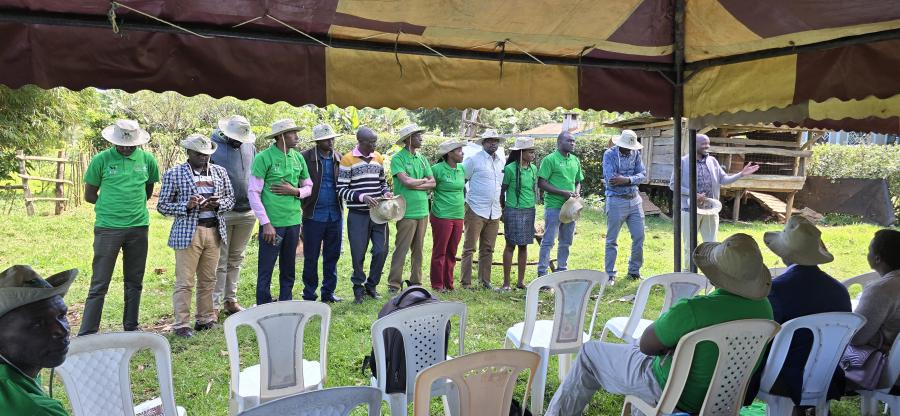
James Gibbons opened the training with a keynote address where he thanked the farmers for continued participation in the HABITAT project and assured them that the project will deliver prompt feedback from the data collection activities noting that the project already delivered a comprehensive soil feedback report for each sample collected. He noted that farmers would receive second feedback on pasture biodiversity and milk productivity during the training.
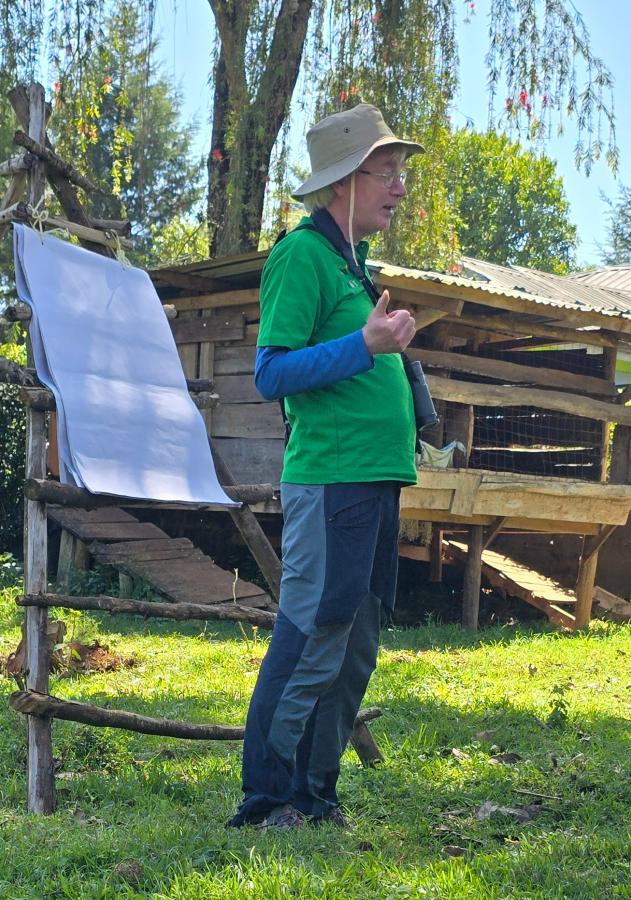
Simon Mwaura explained to the farmers the meaning of HABITAT i.e. “Harnessing Pasture Biodiversity and Productivity” and shared with them the second farmer feedback report on Biodiversity and Production Survey results. This feedback report focused on different farm aspects surrounding the herd size, pastureland, forages, milk productivity and common pasture plant species and nutritional quality. Jesse Kagai offered feedback on feed and feeding, showing that most farmers were reliant on Nappier grass (Pennisetum purpureum) with little diversification. Kelvin Kinuthia gave feedback on the nutritional qualities of the common pasture plants collected in Bomet. After the feedback sessions the County extension staff trained farmers on different topics using the local Kalenjin language and Swahili which ensured that all farmers present were able to follow the training easily without language barriers.
Training Day 1
On the first day of training, Dr. Ronald Sang covered animal health issues surrounding disease causing micro-organisms such as viruses, bacteria, protozoa and disease-causing vectors such as helminths and ticks. Dr. Nicholas Langat covered areas surrounding acaricides and resistance and safe use and disposal of acaricides to overcome the problem of resistance. He also trained the farmers on the classes of the common acaricides in the market to assist with identification.
Training Day 2
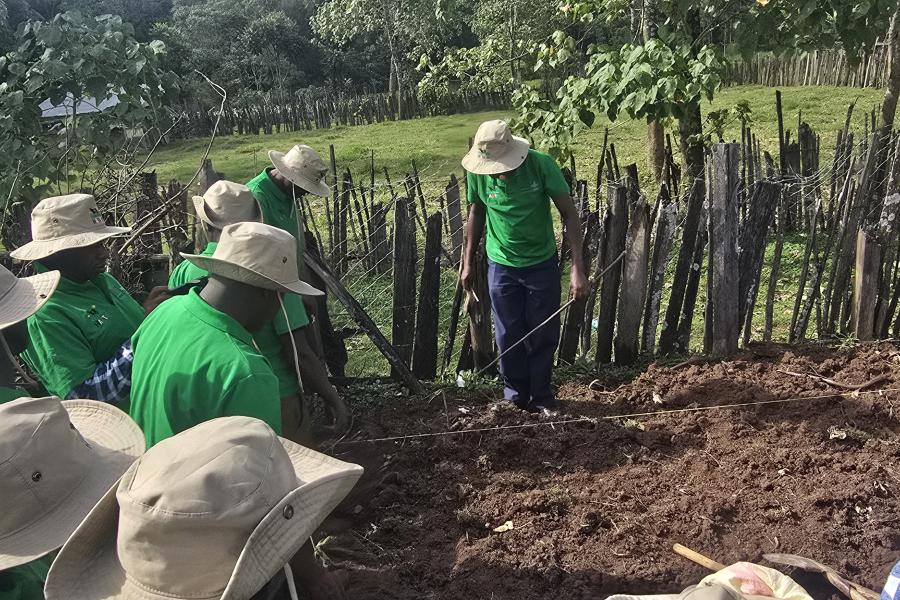
Day two of the training focussed on fodder agronomy led by Edwin Mitei and Bernard Yegon who took farmers through how to make best use of the crop residues through processing and ended with a field practical session. This session also highlighted the importance of uptake of legume fodder plants. Farmers were encouraged to integrate forage legumes such as Desmodium, Lucerne, Calliandra, and Leucaena into their pasture systems to improve feed quality and livestock productivity.
The practical sessions emphasised the proper selection of propagating materials and the use of climate smart practices to ensure proper water retention and fast growth. Propagating materials include seeds, cuttings, splits, and seedlings used to establish grasses, legumes, and fodder trees.
The quality and suitability of these materials directly influence pasture productivity, biodiversity outcomes, climate resilience, and long-term farm profitability. Two planting techniques were demonstrated and included the trench method and the pit method/ tumbukiza method. Use of farmyard manure was also encouraged. The practical sessions marked the end of the training.
Closing remarks
During the closing ceremony the county Director of Agriculture thanked all the farmers for the active participation in the two-day training and also in the HABITAT project. He urged the farmers to be leaders and requested them to spread the training far and wide to bring sustainable production benefits to Bomet and the neighbouring counties.
He further thanked the HABITAT project for the great initiative and commended the team for excellent work that addresses some of the most pressing needs of the local community. He also committed full support from the County for the ongoing work.
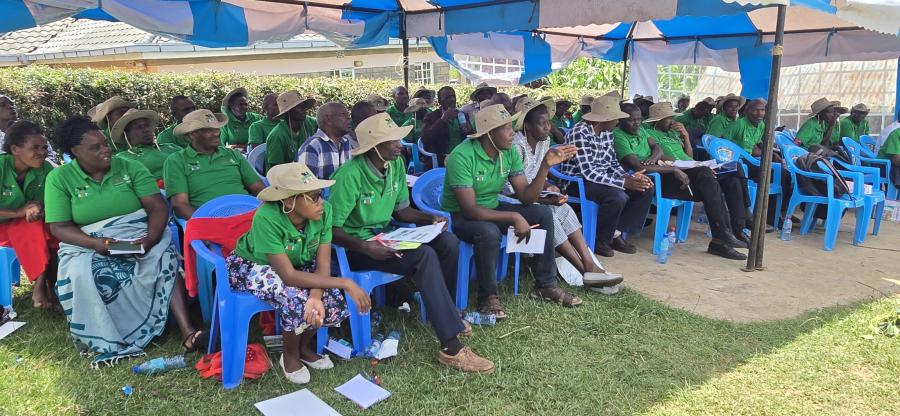
To achieve the training Nathan and Emmaculate played a significant role in logistics planning and organization, Nathan said “Having been on the ground collecting data for the project for the past one year, the on-demand training brought a sigh of relief to me knowing that the very questions farmers kept asking me while in the field were addressed in well-tailored training that suits their knowledge needs.”
Emma said “For the on-demand farmer training, my role involved organizing venues, coordinating with farmers, and managing logistical aspects of the farm-based sessions. This included hiring chefs, negotiating prices, setting up tents and utensils, purchasing groceries, and ensuring learning materials were available on demand. Using a conference facility could have eased logistical burdens by providing catering and venue setup, allowing me to focus solely on farmer communication. However, it was better for us to go to the farmers rather than the farmers coming to us”.
Feedback
Emmy Kirui from Kembu ward, Bomet East noted that; "The soil feedback results have helped me plan my farm soil fertility to boost maize production, further, today's training will help me prevent any future outbreaks of East Coast Fever and diarrhoea on my farm, two problems which have bothered me for a long time".
Wilson Kering from Tarakwa Ward, Bomet Central added, "I wish to convey my gratitude to the HABITAT Project and ILRI for this training, I wish to request my fellow farmers too to spread it far and wide, I wish to also ask my fellow farmers to use chaff-cutter machines safely, since they have led to many preventable accidents across many dairy farms in Kenya".
Finally, the County Director of Agriculture noted that, "We sincerely thank the training organisers and all participants for attending this training. As a county we have been having a problem of low attendance by women in agricultural training, we shall use a similar GESI approach used by HABITAT in future interventions".
Next steps
We look forward to the upcoming Farmer Field Days to build on these shared experiences.
Keep watching this space for updates.
Learn More
Explore the HABITAT Project:
👉 https://www.gcbc.org.uk/project/habitat-harnessing-pasture-biodiversity-and-productivity/