


Our research
Our research addresses both fundamental questions about how and why animals do what they do. We seek to explore how animals respond and interact with their environment, to better understand how they cope with environmental change. With this approach, we can also ask applied questions relevant to the conservation and welfare of animals. Our research is interdisciplinary and global, and we use both laboratory and field-based methods to study the behaviour, ecology, and physiology of animals.
Topics we study
Our research topics include:
- animal behaviour
- climate change effects
- navigation and migration
- biomechanics of animal movement
- reproductive physiology
- sensory ecology
We cover a diversity of research topics and work on a wide range of animals (see right). Each staff member has a blurb outlining their research below, so please click on to their profiles to learn more about what each of us is currently researching.


Meet the team


Our PhD students


Recent Publications
A selection of recent publications from BEPS researchers is listed here, but for all the latest publications, please check individual researcher pages linked above.
- A continuous feast of bramble: Rubus fruticosus agg. is a key cross-seasonal dietary resource for a fallow deer population Gresham, A., Pillay, K., Healey, J., Eichhorn, M., Ellison, A., Lowe, A., Cordes, L., Creer, S. & Shannon, G., 2025, Ecological Solutions and Evidence. 6, 1 10.1002/2688-8319.70008
- Wood trait-decay relationships vary with topography and rainfall seasonality in a subtropical forest in China Wu, D., Chen, Y., Ellwood, M. D. F., Shao, Z., Wang, Y., H. C. Cornelissen, J. & Chu, C., 2025, Journal of Ecology. 113, 3, p. 763-777 10.1111/1365-2745.70006
- Knowledge transmission, culture and the consequences of social disruption in wild elephants Bates, L., Fishlock, V. L., Plotnik, J., de Silva, S. & Shannon, G., 2025, Philosophical Transactions of The Royal Society B: Biological Sciences. 380, 1925, 20240132 10.1098/rstb.2024.0132
- Adjustable wind selectivity in shearwaters implies knowledge of the foraging landscape Harris, S., Bishop, C. M., Bond, S., Fernandes, P. G., Guilford, T., Lewin, P. J., Padget, O., Robins, P., Schneider, W., Waggitt, J., Wilmes, S.-B. & Cordes, L., 2025, Current Biology 10.1016/j.cub.2024.12.017
- Meta-analysis reveals that phenotypic plasticity and divergent selection promote reproductive isolation during incipient speciation Jarrett, B. J. M., Downing, P. A. & Svensson, E. I., 2025, Nature Ecology and Evolution. 9, p. 883-844 10.1038/s41559-025-02687-7
- A Newly Discovered Symbiotic Relationship Between Giant Cowbirds (Molothrus oryzivorus) and South American Tapirs (Tapirus terrestris) in Suriname Backshall, S., Dunn, C. & Mainwaring, M. C., 2025, Austral Ecology. 50, 1, e70020 10.1111/aec.70020
- Dynamics of X chromosome hyper-expression and inactivation in male tissues during stick insect development Djordjevic, J., Tran Van, P., Toubiana, W., Labédan, M., Dumas, Z., Aury, J.-M., Cruaud, C., Istace, B., Labadie, K., Noel, B., Parker, D. J. & Schwander, T., 2025, PLoS Genetics. 21, 3, p. e1011615 10.1371/journal.pgen.1011615
- Elevating local perspectives for equity in ecological research. de Angeli Dutra, D., Erikson, A., Genes, L., Dirzo, R. & Venturini, A. M., 2025, Trends in Ecology and Evolution. 40, 5, p. 415-418 10.1016/j.tree.2025.03.006
Latest News
See More-
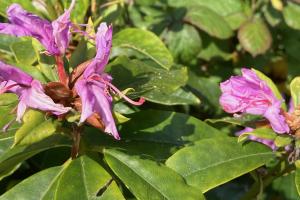 16 June 2026
Can native insects help tackle invasive plant species threatening Wales’ woodlands?
-
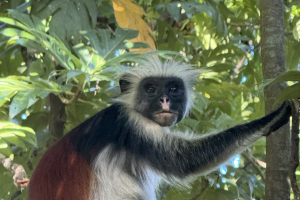 6 February 2026
Two Bangor students win prizes at the Winter Meeting of the Primate Society of Great Britain in Cardiff
-
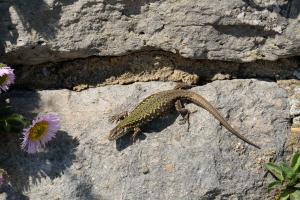 10 December 2025
New research suggests warming winters could cause DNA damage in lizards
-
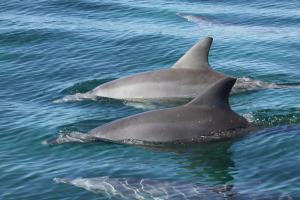 12 June 2025
Synchronised breathing spreads diseases for Bottlenose dolphins and other cetaceans


Opportunities
If you are interested in completing postgraduate research (MRes or PhD) with us please contact individual staff members to discuss.