

Risk of snakebites increasing as reptiles adapt to changing world
Snakebite is one of the world's most overlooked medical emergencies, killing 138,000 people and leaving 400,000 with permanent disabilities each year, mostly in rural tropical regions. One major barrier to tackling this problem is that we don't know enough about where dangerous snake species live, or where encounters between snakes and people are most likely to occur.
In this study, the authors, including MEEB researcher Prof. Wolfgang Wüster, used niche modelling to map the ranges of all medically important venomous snakes, then combined these maps with human population data to pinpoint the areas at greatest risk of snakebite. They also modelled how climate change could alter these patterns in the future, finding that many snake species are likely to shift their ranges, and that more people in some parts of the world could be exposed to snakebites as a result. These findings could help guide where antivenom supplies are allocated and how health systems prepare for the changing geography of snakebite risk in a warming world.
To see a Guardian article on the topic, see here.
To see the research paper, see here.
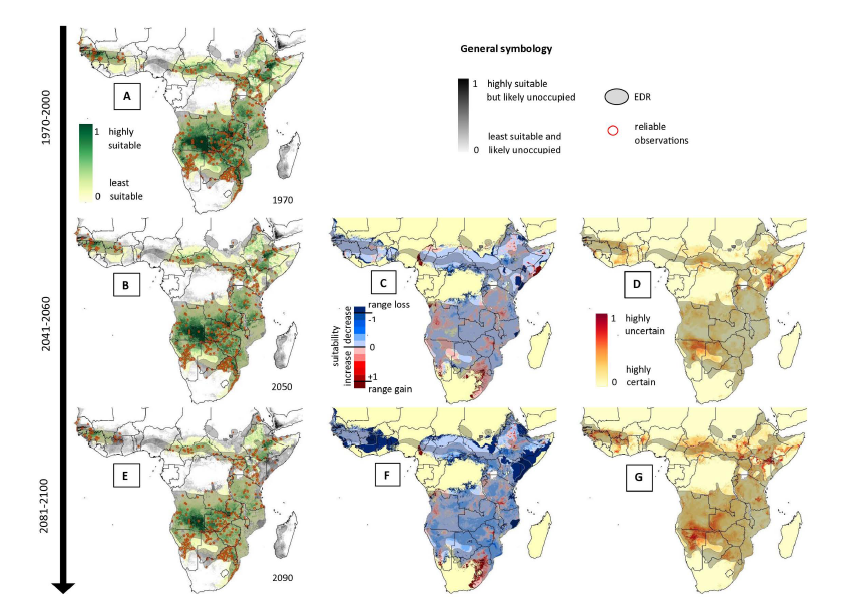
Figure from Pintor et al., (2026). Climate change induced complex shifts in snake distributions expose people to snakebite and threaten biodiversity. PLoS Negl Trop Dis, 20(5): e0014030. https://doi.org/10.1371/journal.pntd.0014030