
Building Skills and Connections: WGSSS Methods Training Camp at Bangor University
Written by Beccy Ives
In mid-May, Bangor University welcomed 13 postgraduate researchers from across Wales for a three-day Methods Training Camp as part of the ESRC-funded Welsh Graduate School for the Social Sciences (WGSSS).
Hosted by Bangor University's School of Environmental Natural Sciences, the training camp brought together doctoral researchers from the Human Geography and Environmental Planning pathways as part of the Place, Environment and Development cluster for an intensive programme of methodological training, discussion and collaboration. Organised by cluster lead Dr. Freya St John, the event provided participants with valuable opportunities to develop both their research skills and professional networks.
Research Impact and Building Meaningful Networks
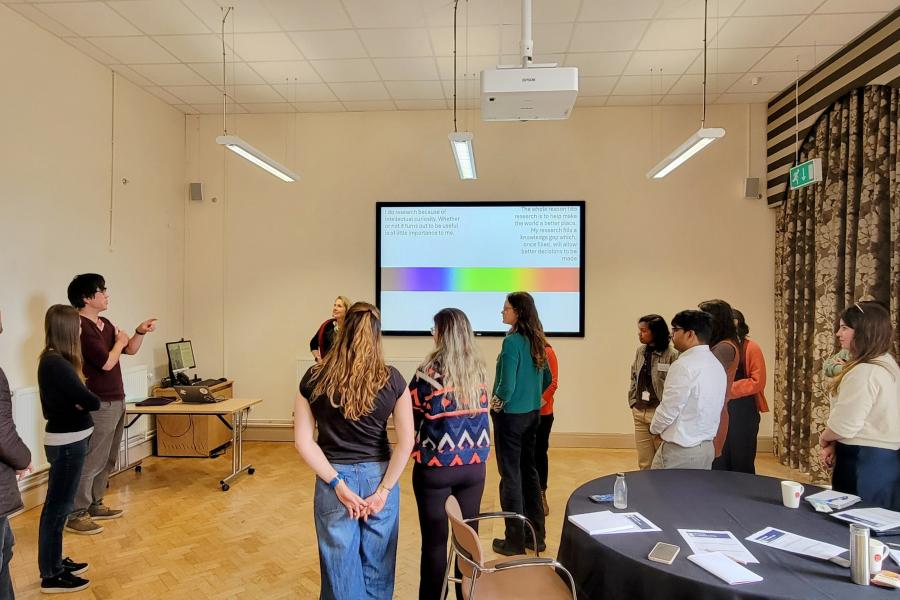
The training began with an inspiring plenary session from Professor Julia Jones, Making Research Matter. Drawing on her extensive experience in academia, conservation and policy engagement, Professor Jones reflected on seven lessons from a career dedicated to creating real-world impact. The session encouraged participants to think critically about the changes they hope their research will bring about, who they need to engage with to achieve that impact, and how networks, collaborations and communication can help translate research into action.
This emphasis on shared learning continued in a student-led discussion session, where participants explored methodological challenges they were encountering in their own research. The mix of first year and more advanced doctoral researchers proved particularly valuable, creating opportunities for peer learning, practical advice and the exchange of resources and experiences.
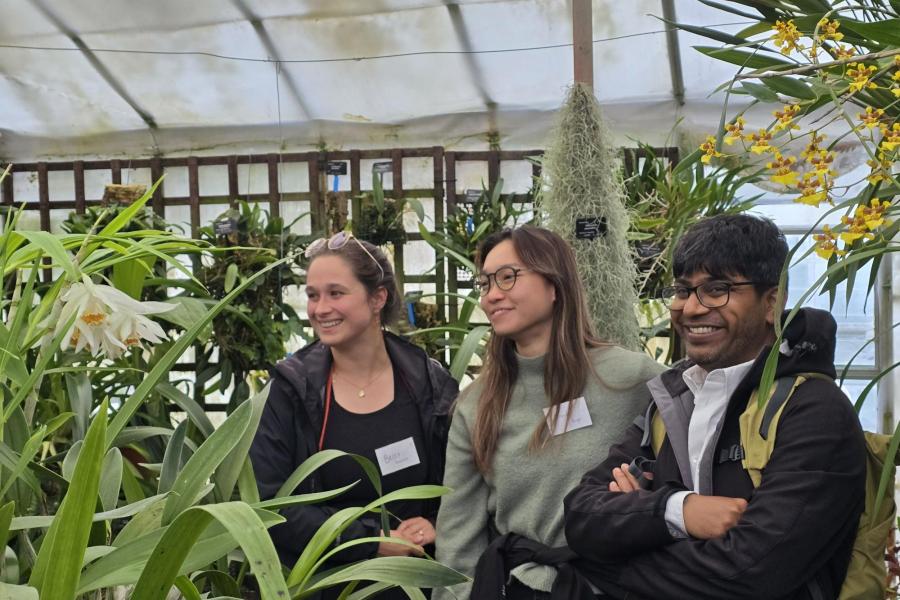
The first day concluded with an evening visit to Treborth Botanic Garden where we enjoyed a picnic, explored the glass houses and continued conversations in a more informal setting.
Developing Quantitative Research Skills
Day two focused on quantitative research methods. Dr. Whitney Fleming introduced participants to psychometric scales, covering key concepts in scale design, validity and reliability, while encouraging critical reflection on how complex social and psychological concepts can be measured.
Dr. Freya St John then led an interactive session on asking sensitive questions in survey research, introducing innovative approaches designed to improve data collection on sensitive topics. The day concluded with a practical workshop led by Dr. Leejiah Dorward on digital data collection using KoBoToolbox, equipping participants with the skills needed to design and implement their own electronic surveys.
For many attendees undertaking mixed-methods research, these sessions provided valuable insights into the strengths, limitations and practical applications of quantitative approaches. Just as importantly, the discussions sparked new ideas about how different methods could be integrated into ongoing projects.
Exploring Qualitative and Creative Methods
The final day took place at Bangor University's Henfaes Research Centre, providing a fitting setting for a series of qualitative methods workshops. Dr. Sophie Wynne-Jones introduced participants to walking interviews, combining theoretical discussions with practical fieldwork across the farm's diverse landscape. With mountains on one side and the sea on the other, participants were able to experience first-hand how place and movement can shape research encounters and generate new insights.
This was followed by an engaging session from Dr. Neal Hockley on language and meaning in social science research. Through a combination of discussion and practical exercises, participants explored how differences in disciplinary backgrounds, cultures and personal experiences can shape the meanings attached to key concepts. The session highlighted the importance of establishing shared understanding between researchers, participants and audiences, while also illustrating how seemingly straightforward terms can be interpreted in very different ways.
The training concluded with an interactive workshop led by Dr. Heli Gittins on visual methods, including the use of drawings and photovoice approaches. Participants were encouraged to consider how visual methods might complement or enrich their own research designs, particularly when exploring experiences, identities and perspectives that may be difficult to capture through traditional interviews or surveys.
Collaboration, Confidence and New Perspectives
Across all sessions, participants benefited not only from expert methodological training but also from the opportunity to discuss their own projects with experienced researchers and peers. The small-group format created space for meaningful conversations, constructive feedback and collaborative problem-solving. Many attendees left with fresh perspectives on their research, and new methodological tools to explore.
Perhaps most importantly, the training camp reinforced the value of research communities. For those who attended, the WGSSS Methods Training Camp was not only an opportunity to expand their methodological toolkit, but also a chance to become part of a wider community of researchers working across Wales. Participants represented different universities and research interests, and the event provided a supportive environment in which experiences, challenges and ideas could be shared openly. Throughout the three days, discussions frequently extended beyond the training sessions, allowing researchers to build relationships that will continue long after the event itself.
The WGSSS Methods Training Camp was funded by the Welsh Graduate School for the Social Sciences (WGSSS), an ESRC-funded doctoral training partnership that supports postgraduate researchers across Wales through advanced training, collaboration and opportunities for interdisciplinary learning. WGSSS is a partnership of seven universities across Wales, supporting around 70 PhD studentships each year across 15 subject pathways. These span a diverse range of disciplines, from Digital Economy and Society, Education and Linguistics, to Criminology and Law, Sport and Exercise Science, Environmental Planning, and Human Geography.