
Aim
The aim of the AdaptQoL project is to develop a new patient-reported outcome measure (PROM) for assistive technology users. PROMs are questionnaire tools commonly used to measure individual health outcomes, like quality of life and symptom management. Sometimes PROMs are preference-based, which means that they reflect patient or societal preferences for different states of health.
In this project we aim to develop a new preference-based PROM which will support health economists, clinicians, therapists and patients to accurately measure the quality of life benefits of different assistive technologies, both for the purpose of informing patient care and informing decision-making.
Background
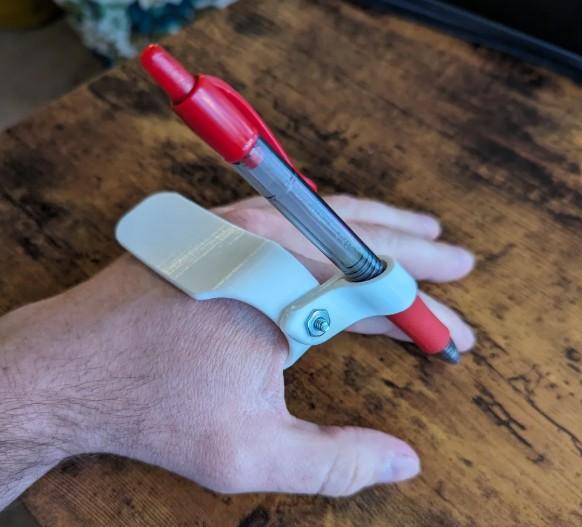
Almost a quarter of the UK population has some form of disability, equating to more than 16 million people. For people who live with a disability, assistive technologies can facilitate, promote and improve participation in education, work, social/leisure activities, and overall independence. Assistive technology is a broad term which refers to many different low- and high-tech devices and interventions, such as wheelchairs, hearing aids, home adaptations, communication aids, environmental controls, aids for personal care and so on.
More than 30% of the global population utilises one or more assistive technologies. Despite the great potential of assistive technologies to support people with disabilities and chronic conditions, around 70% of these devices are abandoned prematurely due to issues with design and usability.
We believe there is great potential to enhance assistive technology provision through better outcome measurement; a recent systematic review by Borgnis et al (2023) found that 53 different outcome measures have been used to assess assistive technologies, but only 32% of these measures were specifically designed to evaluate assistive technologies, none of which were preference-based. Furthermore, 64% had only been used in one study, demonstrating poor uniformity and concordance.
Our ambition is that the AdaptQoL PROM will fill this gap in preference-based measurement options and provide a unified approach to health-related quality of life outcome measurement in this context.
Planned research
The AdaptQoL Master Protocol can be viewed on the Open Science Framework website here: OSF | AdaptQoL Master Protocol 23Sept25 v1.2.pdf
The AdaptQoL project will consist of four work packages:
WP 1 (completed): Development of the AdaptQoL descriptive system (i.e. survey questions and answers) by interviewing 39 assistive technology users to understand the relationship between health, adaptation and quality of life
WP 2 (in progress): Refining the AdaptQoL descriptive system through piloting (n=250) in relevant patient groups - this will include assessment of psychometric properties using Rasch analysis and exploratory factor analysis
WP 3 (upcoming): Development of a preference-based scoring system using the Online Elicitation of Personal Utility Functions (OPUF) method. We will also compare differences in the health state preferences of the general public (n=300) and people who have experience of using adaptations (n=300)
WP 4 (upcoming): Development of a Welsh language version of the AdaptQoL, using linguistic validation and cognitive interviewing of relevant stakeholders (n=10)
Patient and Public Involvement (PPI)
We believe that research is stronger, more relevant, and more impactful when it is shaped by the people it is intended to benefit. Patient and Public Involvement (PPI) is embedded throughout our work, ensuring that the experiences, priorities, and perspectives of people with lived experience inform every stage of the research process. Our PPI contributors will be involved in:
- Identifying research priorities.
- Selecting outcomes that are meaningful to patients and communities.
- Reviewing participant information sheets and recruitment materials to ensure they are clear and accessible.
- Advising on recruitment strategies and approaches to engagement.
- Contributing to study governance through advisory group meetings.
- Interpreting findings and ensuring that conclusions reflect lived experience.
- Supporting dissemination activities and helping to communicate findings to wider audiences.
Hear from our PPI contributors
In these short videos, our PPI contributors share their perspectives on being involved in research and how they feel their contributions have helped shape research and improve outcomes.

Joan Woods, PPI contributor
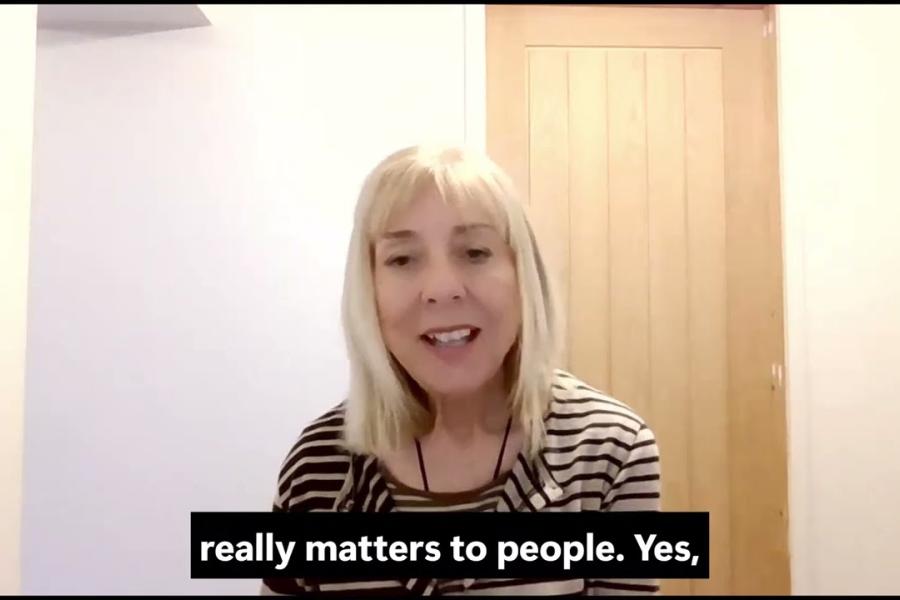
Jaci Huws, PPI contributor
So the question is, which aspects have been most enjoyable and which have been challenging for me?
The enjoyable part is that for some reason it just feels like my whole life has been leading towards this and that I've worked in the nursing system, I've been on the other end of providing care and assessment, then I've been involved in the research and then later the health issues.
Despite all the issues, despite all the difficulties and the problems, I'm actually able to use them with what I've done before and it just feels like a culmination of what my life is about.
So it, it feels really quite special, right precious to me.
But there have been some challenges and for me one of them is having to admit to myself the realities of what my disabilities, what my health problems have done to myself, worth have done to my mood and actually coming to terms with that.
But thankfully the rest of the team have been there supporting me, not just the expert panel but also Hannah and the wider research team.
So a question that gets gets asked is how can PPI experts help improve outcome measurement research?
Well, we can do this by helping researchers focus on what really matters to people.
Yes, researchers might be interested in measuring clinical or technical outcomes, but I am people like me who use adaptive devices often judge quality of life in much broader ways, you know, such as being independent or feeling confident taking part in conversations or just being able to know what's going on in the world.
So, you know, I think PPI contributors can help identify areas that researchers might sometimes overlook.
We can help make sure that research and questionnaires and that can measure the use language that people understand and relate to.
And, you know, we can highlight practical issues such as whether questions are appropriate, you know, whether an important aspect of experience is missing or whether completing a measure places some burden on participants as well.
So it's all about making measurement research more relevant and inclusive.
And as a result, you know, the research is more likely to produce findings that are meaningful to the people the research is actually for.
And one of the things, an important thing I've learned from this project is that good research is strongest when researchers and people with lived experience work together as equal partners.
You know, PPI can help ensure that, you know, measures being developed just don't work statistically, but they also reflect what matters in people's lives.
Listen to a podcast episode with Jaci and Joan
Contact us
If you would like to receive updates about AdaptQoL or are interested in research collaboration, please fill out this form. Alternatively, please contact Chief Investigator Dr Nathan Bray.
Email: n.bray@bangor.ac.uk
Phone: 07792670053
The AdaptQoL project will run until April 2027 and is funded by the Welsh Government through Health and Care Research Wales.