

Welcome to Your Applicant Hub
Explore what makes Bangor University special, from our stunning location to our supportive community choosing English Language and Linguistics at Bangor is the start of an exciting journey. Studying at Bangor means learning from passionate experts who put your success first. Here, you’ll gain the knowledge and skills to shape your career with confidence.
Your Applicant Hub is your go-to space for everything you need to prepare for the next step. Explore what’s waiting for you and start planning your future today.
What to expect as a English Language and Linguistics student
Our courses are taught by world-leading academics and practitioners who are passionate about their subjects. You will learn from experts who are at the forefront of their fields, and you will have access to a wealth of resources to support your studies. Our dedicated team of academics are not just knowledgeable but also have a diverse range of expertise and passions.
We are committed to providing a supportive and inclusive environment for all of our students. We have a dedicated team of staff who are here to help you with your studies and to make sure that you have a positive experience at Bangor.
You will have access to four state‑of‑the‑art research labs equipped with eye‑tracking, ERP technology, professional‑grade audio recording, motion‑capture systems and linguistic corpora, depending on your interests and projects.
Received A Clearing Offer? Here Are Your Next Steps

Accept Your Clearing Offer
We will email you with your official Clearing offer and instructions on how to accept the offer by selecting Bangor University as your Clearing choice on UCAS Hub.


Make Friends Before Arriving
Join the Campus Connect app and you can ask questions, chat with current students and make friends with other applicants on your course and in your chosen accommodation. You'll be invited to join by email.

Watch our video

My name is Dr Peredur Webb-Davies and I lecture in Linguistics and in our department we all study and research Linguistics the English Language or Bilingualism, and we're part of a larger school where everybody studies and researches the arts, the humanities and culture and language.
As a student with us. you will be studying, at least in your first year, things about how language works, language variation, language origins, the nitty gritty of language, things like the sounds, the structure, and the words of language.
Bangor is a wonderful place to study. It's in a friendly, tightly knit rural community, and it's incredibly bilingual, with the Welsh language and culture being really a primary in the community, and we are also a very international community. So we look forward to meeting you again very soon.
Thank you. Goodbye.

Emily Drake-Brockman How language inspired a career in Teaching
Emily studied Linguistics and Psychology at Bangor University
"I studied Linguistics and Psychology at Bangor and loved exploring how language develops, especially through modules like Psycholinguistics and Child Language Acquisition. My dissertation on Flemish–French bilingualism sparked a real interest in how language shapes education.
"After completing my PGCE at Bangor, I became a primary teacher, and I now work with children with Additional Learning Needs. Everything I learned about child language development helps me tailor my teaching so every child can communicate, learn and thrive in their own way."

Ronan Kalinsk From Linguistics to the Royal Air Force
Ronan studied Linguistics and English Language at Bangor University
"Studying Linguistics and English Language at Bangor shaped everything that came next for me. I loved diving into Phonetics and Phonology, and my dissertation on speech disorders fueled a real interest in how language works. Those analytical skills took me into Speech and Language Therapy and then Further Education, supporting young people with SEND.
"That same attention to detail and curiosity eventually led me to my current role as an Officer in the Royal Air Force, where I use those skills every day to help keep aircraft, and people, safe."
Frequently Asked Questions
In a typical week, you’ll have a balance of structured and flexible learning, with 6–11 contact hours in years 1 and 2, alongside additional time for independent study. In addition to scheduled sessions, you will be able to meet with fellow students with similar interests (such as the Bangor Linguistics Society), as well as with members of staff in their office hours.
Contact hours per week can vary depending on your specific course, year of study, and the mix of lectures, seminars, tutorials, and practical sessions.
No, fluency in a second language isn’t required, but it can be beneficial. Bangor University offers language courses if you're interested in learning another language. Our introductory language modules will also help you understand different linguistic structures across languages, even if you don't speak another language.
Graduates may want to pursue careers in translation, linguistics research, publishing, lexicography, content writing, communications, media, or work with technology companies specializing in natural language processing (NLP). The degree will equip you with a wide range of skills that are valuable across many different career paths that directly relate to English Language and Linguistics and beyond. You may choose to undertake further postgraduate study and train for a career in speech and language therapy or a career in teaching at primary or secondary level, TEFL or TESOL.
Students and researchers benefit from state-of-the-art facilities, from a professional-grade sound and recording studio with anechoic chamber, to eye-tracking labs, EEG for ERP studies, and comprehensive corpus-linguistics resources. They can also make use of the student-led Bangor Linguistics Society’s dedicated study and relaxation space, which includes an extensive linguistics-themed library featuring many core texts.
Meet some of your lecturers
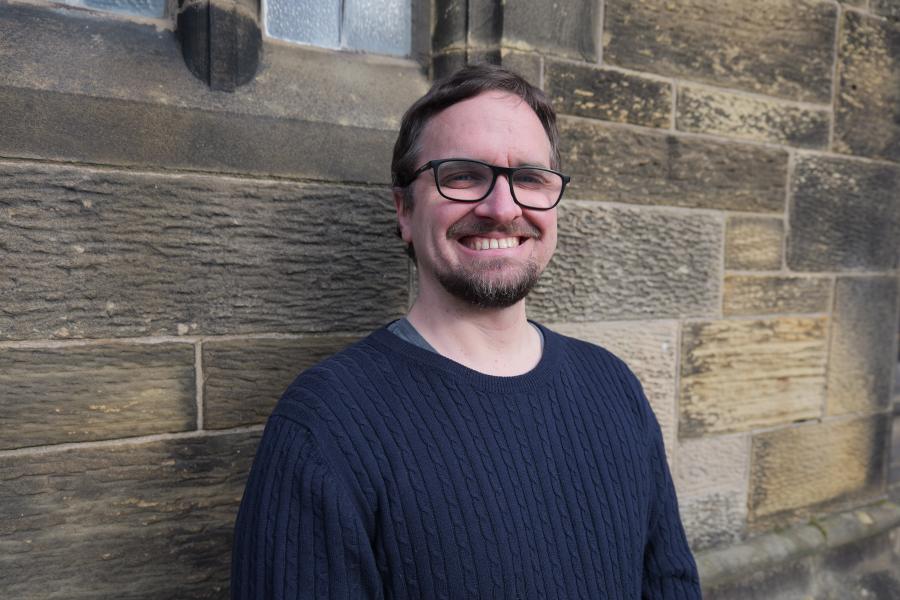
Dr Peredur Webb-Davies
That there is such a thing as 'speaking correctly'. As long as someone can be understood, then however they speak - no matter how standardly or formally, or the opposite - then they are speaking correctly. But a lot of people (outside of linguistics, naturally!) believe that there is something better about using standard grammar, for example; the truth is that this is only one form of language, suitable for some situations but not for all.
I love opening people's eyes to variation in language and all the different ways that people use a language like English or Welsh. Finding out about and discussing the reasons why people speak differently is really interesting too.
- Interesting
- Important
- Eye-opening
Make sure you keep a balance between your work (i.e. your course) and your spare time.
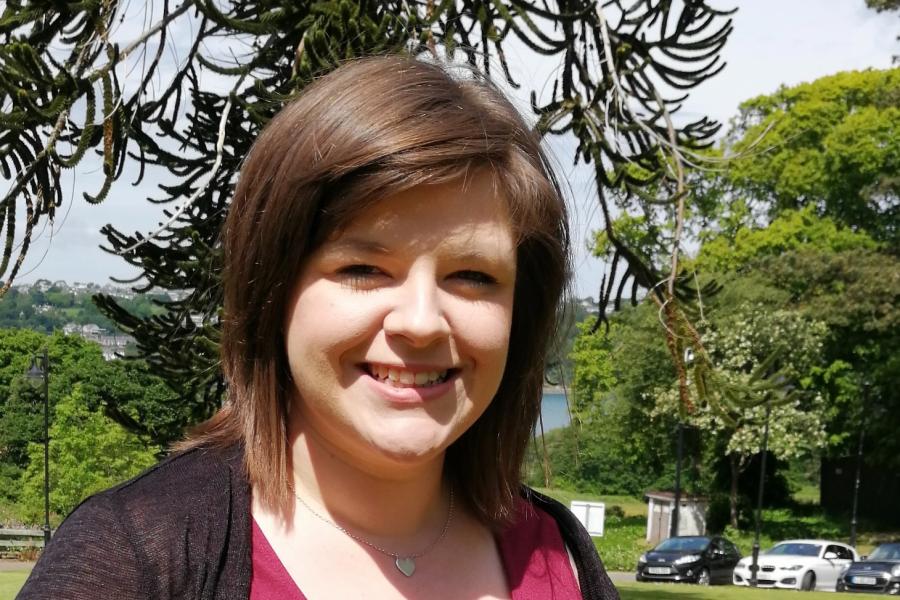
Dr Sarah Cooper
I am interested in the way languages learners pronounce the language they are learning and the way people view those with a different accent. I myself have learned Welsh and have seen that some people can pronounce the language like a native speaker, whilst others speak with the strong accent of their first language.
When I say I teach Linguistics, I usually get the question "How many languages do you speak?" and I have to explain what exactly we study on the Linguistics and English Language course.
Catch the bus to Beaumaris and have an ice cream!
Innovative, Exciting, Transformative!

Guaranteed accommodation for Clearing applicants
If you apply through Clearing for a course that's based at our Bangor campus, you are guaranteed a place in University accommodation as long as you choose Bangor through UCAS by Thursday, 27 August 2026, and book your place in halls by Monday, 31 August September 2026. Unfortunately, due to a limited number of rooms, we are unable to guarantee a place in accommodation at our Wrexham campus.

Opportunities to Visit Bangor University During Clearing 2026
If you have been made an offer to study at Bangor, we encourage you to visit us. By visiting the campus, you'll get a real insight into student life here and can familiarise yourself with the University buildings and Bangor itself. We look forward to welcoming you here.

How can you make friends before starting university?
Meet other applicants and be part of our Bangor student community even before arriving at Bangor! Join the Campus Connect app and you can ask questions, chat with current students and make friends with other applicants on your course and in your chosen accommodation. You'll be invited to join by email, which will also include your Bangor University reference number that you'll need to register.

Changed your mind? You're Not Alone
If you’ve met the conditions for your current UCAS choices but don’t feel it’s right for you, you can choose to go through Clearing. Explore your options at Bangor and fill in the online form to register your interest in Clearing or to apply for Clearing if you already have your results.
Already planning to join Bangor but thinking about a different course? We're here to help! Please fill in the online form.
