

Cynllunio Addysgu ac Ymchwil ar gyfer ein project cadwraeth siarcod ym Mhrifysgol IPB, Bogor
Cymrawd Ymchwil Dr Hollie Booth ym Mhrifysgol Bangor
Yr wythnos hon ymwelais â Phrifysgol IPB yn Bogor, Indonesia, am bedwar diwrnod o addysgu, hyfforddi a chynllunio ymchwil gyda chydweithwyr yn y Ganolfan Astudiaethau Adnoddau Arfordirol a Morol (PKSPL). Roedd yr ymweliad yn gyfle i gryfhau ein partneriaeth ag IPB – un o brifysgolion gorau Indonesia ym maes gwyddor môr a physgodfeydd – ac i fuddsoddi yn y genhedlaeth nesaf o ymchwilwyr cadwraeth sy'n gweithio ar gadwraeth siarcod a chathod môr yn Indonesia.
Darlithoedd gwadd i fyfyrwyr PhD a Meistr
Yn ystod yr ymweliad, traddodais gyfres o ddarlithoedd gwadd i fyfyrwyr PhD a Meistr yn Labordy Economaidd-Gymdeithasol y Môr (Labordy SESO) PKSPL, dan arweiniad yr Athro Luky Adrianto. Roedd y dosbarthiadau'n ymdrin â phedwar pwnc sydd wrth wraidd ein rhaglen ymchwil: rhyngweithiadau rhwng siarcod a bodau dynol, sy'n archwilio'r ffyrdd cymhleth ac yn aml gwrthgyferbyniol y mae pobl yn ymwneud â siarcod a chathod môr, o werth twristiaeth i werth treuliannol i ofn; newid ymddygiad ar gyfer cadwraeth, gan edrych ar sut y gellir defnyddio mewnwelediadau o wyddorau ymddygiadol i ddylunio ymyriadau mwy effeithiol; faint yw gwerth siarc, gan archwilio'r gwahanol ffyrdd y gallwn werthfawrogi siarcod a beth mae hynny’n ei olygu o ran gwneud penderfyniadau cadwraethol; ac ymchwil-i-effaith, gan ganolbwyntio ar sut i ddylunio a gwerthuso rhaglenni cadwraeth yn drylwyr yn y math o systemau economaidd-gymdeithasol cymhleth yr ydym yn gweithio ynddynt ledled Indonesia.
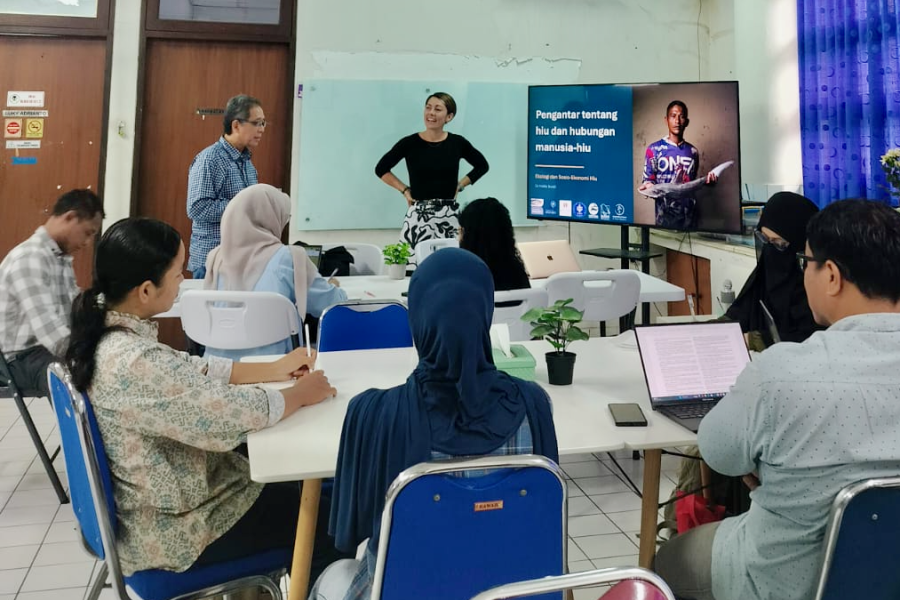
Mae'r pynciau hyn yn adlewyrchu'r dull rhyngddisgyblaethol sy'n sail i'n gwaith: deall nid yn unig ecoleg rhywogaethau sydd o dan fygythiad, ond y dimensiynau dynol – y fywoliaeth, y cymhellion, y normau a'r sefydliadau – sy'n pennu yn y pen draw a yw rhaglenni a pholisïau cadwraeth yn llwyddo neu'n methu.
Roedd y trafodaethau’n wych. Gwnaeth argraff arnaf sut y gwnaeth yr holl fyfyrwyr gofleidio gweithio rhyngddisgyblaethol, adfyfyrio ar y risg o adborth cymhleth a chanlyniadau anfwriadol mewn systemau dynol-naturiol cysylltiedig, a deall pwysigrwydd dylunio ymyriadau rheoli sy'n addas i'r cyd-destun y cânt eu gweithredu ynddo yn hytrach nag un dull sy’n addas i bawb.
Cynllunio ymchwil PhD Egin ar fasnach cathod môr corniog
Un o brif ffocws yr ymweliad oedd gweithio gyda'n myfyriwr PhD newydd, Muhammad Salim (a elwir hefyd yn Egin) i gynllunio ymchwil ei ddoethuriaeth. Bydd PhD Egin yn mynd i'r afael ag un o'r cwestiynau pwysicaf ym maes cadwraeth elasmobranciad ar hyn o bryd: deall masnach rhywogaethau sydd dan fygythiad ac sydd ar restr y CITES, gyda ffocws penodol ar gathod môr corniog.
Rhoddir sylw rhyngwladol cynyddol i gathod môr corniog. Yng Nghynhadledd ddiweddaraf y Partïon i’r CITES (y Confensiwn ar Fasnachu Rhyngwladol mewn Rhywogaethau sydd mewn Perygl), cymeradwywyd cynigion i drosglwyddo pob cath fôr corniog i Atodiad I – sy'n golygu gwaharddiad llwyr ar fasnach ryngwladol. Mae deall sut y gallai'r newidiadau rheoleiddiol hyn ddatblygu'n ymarferol, a'r ffordd orau o ymyrryd i gyflawni canlyniadau cadarnhaol i boblogaethau cathod môr corniog a'r cymunedau pysgota sy'n eu dal, yn hanfodol (am ragor o wybodaeth gefndirol ynglŷn â pham mae hyn yn bwysig, gallwch ddarllen fy mhapur a’m herthygl ar ‘Making CITES Count for sharks and rays’, a gyhoeddwyd yn ddiweddar yn Nature Ecology and Evolution).
Bydd ymchwil Egin yn archwilio masnach cathod môr corniog ar nifer o raddfeydd: mapio patrymau masnach ar lefel genedlaethol ledled Indonesia a chynnal ymchwiliadau manwl i safleoedd penodol i brofi rhagdybiaethau am yr hyn sy’n ysgogi pysgota cathod môr corniog yn lleol, gan gynnwys dynameg cyflenwad a galw, penderfyniadau sy’n cael eu gwneud gan bysgotwyr a strwythurau marchnadoedd. Gyda'i gilydd, bydd y dadansoddiadau hyn yn helpu i ddeall sut mae ymdrechion gweithredu presennol y CITES yn effeithio ar lifoedd pysgota a llifoedd masnach, rhagfynegi sut y gallai mesurau newydd y CITES ddatblygu, a nodi ble a sut y gellir cynllunio ymyriadau rheoli domestig ac ymyriadau rheoli lleol i leihau marwoldeb wrth bysgota wrth gefnogi bywoliaeth arfordirol. Bydd yr ymchwil yn cynhyrchu tystiolaeth sy'n bwydo'n uniongyrchol i brosesau polisi domestig a rhyngwladol, gan gynnwys helpu llywodraeth Indonesia i gyflawni ei hymrwymiadau polisi byd-eang o dan y CITES.
Adeiladu partneriaethau ymchwil hirdymor
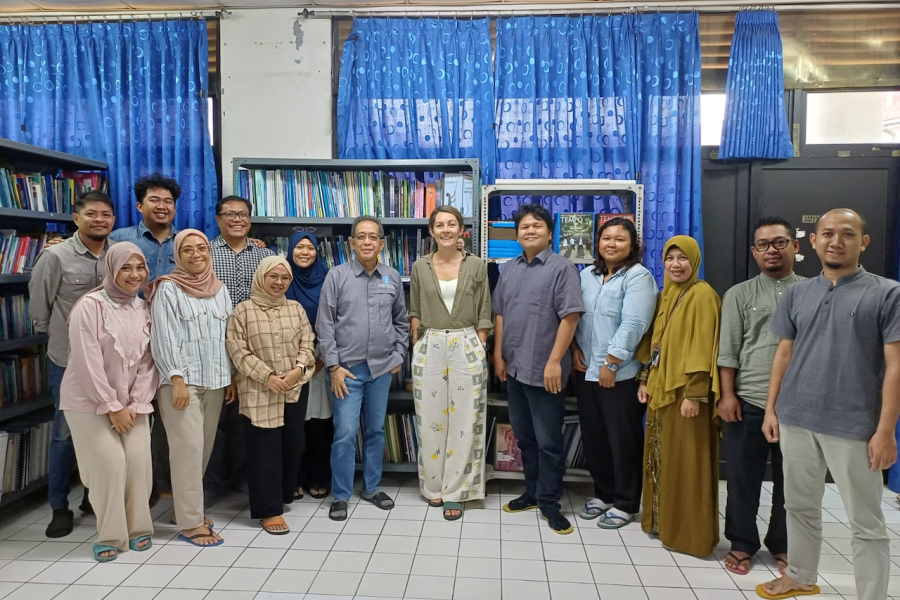
Mae ymweliadau fel hyn yn hanfodol i sut rydym yn gweithio. Mae ein projectau wedi eu hadeiladu ar bartneriaethau agos, hirdymor gydag ymchwilwyr a sefydliadau o Indonesia, ac mae amser wyneb yn wyneb yn amhrisiadwy er mwyn meithrin ymddiriedaeth, alinio blaenoriaethau ymchwil, a sicrhau bod ein gwaith wedi ei seilio ar wybodaeth a chyd-destun lleol. Mae Prifysgol IPB a PKSPL yn bartneriaid allweddol yn ein rhaglen waith ehangach ar gadwraeth siarcod a chathod môr yn Indonesia, ac mae PhD Egin – a gyd-oruchwylir gan Brifysgol IPB a Phrifysgol Bangor – yn fuddsoddiad uniongyrchol mewn adeiladu capasiti ymchwil yn y maes hwn. Cadwch lygad am ragor o ddiweddariadau!
Cefnogir y gwaith hwn gan grantiau gan y Gronfa Cadwraeth Siarcod a'r Gronfa Partneriaethau Gwyddoniaeth Rhyngwladol (ISPF) trwy Brifysgol Bangor.