
Full Project Title: 'Health and Social Welfare at Penrhyn Quarry'
Doctoral Researcher: Molly Williams
Supervised by: Dr Lowri Ann Rees and Dr Mari Elin Wiliam
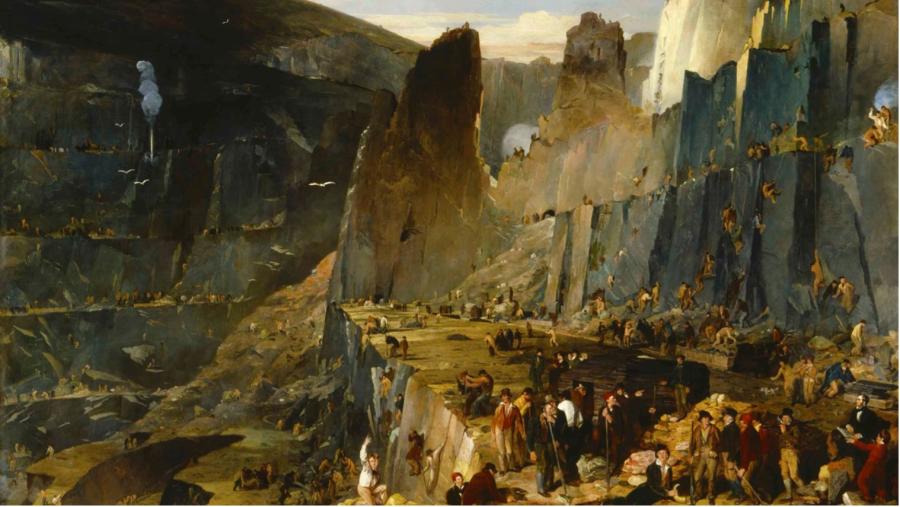
This research project examines the relationship between industry, public health, social welfare, and the development of medicine in Victorian Wales, focusing particularly on the Penrhyn family and the Penrhyn Quarry in North Wales. By using the quarry and its surrounding communities as a case study, the project explores how industrialisation shaped the health experiences of workers and their families, while also considering the responsibilities of wealthy industrialists towards the communities upon which their wealth depended.
The research investigates the occupational illnesses and health challenges experienced within the slate-quarrying slate-quarrying industry, alongside wider developments in nineteenth-century medicine and public health. It considers how working conditions, housing, sanitation, poverty, and access to medical care influenced health outcomes within quarrying communities. In doing so, the project places local experiences within the broader context of the development of medicine in Britain during the Victorian period, including changing understandings of disease, improvements in public health, and the growing involvement of government and local authorities in healthcare.
A central element of the research is the role of the Penrhyn family and their approach to welfare. The project examines whether welfare provision offered by the Penrhyn estate and quarry represented genuine improvements in workers’ health and living conditions, or whether such measures also reinforced existing social and economic relationships between employers and employees. This provides an opportunity to explore the complex relationship between paternalism, industrial power, and public health.
Ultimately, the project aims to demonstrate that the history of medicine cannot be understood solely through major medical discoveries or institutions. By examining the experiences of a specific industrial community, it highlights how medical and public-health developments were experienced at a local level and how industrialisation, social responsibility, and medicine became increasingly interconnected during nineteenth-century Britain.
