

About Us
What does the Plastic Research Centre of Wales do?
The Plastic Research Centre of Wales, based at Bangor University, is at the forefront of research and innovation to comprehensively address plastic pollution and drive change towards a more sustainable future. Our researchers are:
- Furthering understanding of the sources, fate and transport of microplastics in the environment
- Establishing the effects of microplastics and co-contaminants on agriculture and biodiversity
- Engineering enzymes to break down plastic faster
- Developing and evaluating solutions
The team’s work has influenced policy worldwide and is continuing to help shape a global agreement to end plastic pollution, and to provide evidence that underpins appropriate and effective solutions.
Meet The Team
- Dr Jaco H. Baas (Physical transport and weathering of microplastics; size and shape analysis of microplastics)
- Professor Dave Chadwick (Organic resources, Agricultural waste, Plastic mulch films, Agroecosystems, Plastic additives)
- Dr Winnie Courtene-Jones (Sources, fate and environmental effects of microplastics and plastic pollution; Biodegradable plastics; Ecotoxicology )
- Professor Christian Dunn
- Professor Peter Golyshin
- Dr Laura Grange (Polar Regions, Benthic systems, Marine invertebrates, Trophic transfer)
- Professor Davey Jones (Soil, wastewater, water isotopic labelling, biodegradation, biodegradable plastics )
- Dr Karina Marsden
- Dr Mark Manwaring (Ecological effects of plastic, Birds, Macro plastics, Micro plastics)
- Professor Simon Neill (Lagrangian modelling, extreme events, Southeast Asia)
- Dr Peter Robins
- Dr Martin Skov (Mangroves, Saltmarshes, Seagrass beds. UK, Southeast Asia)
- Professor Zengbo Wang
- Dr Emily Cooledge (Agricultural plastic, microplastic, plastic degradation, biodegradable plastic, soil, plastic additives, radioisotopic tracing)
- Dr Martine Graf (Agricultural plastic, microplastic, plastic degradation, biodegradable plastic)
- Dr Jessica Kevill (Environmental virology, wastewater, public health)
- Achini Dias (Microplastics, nutrient cycling, agriculture, biodegradable and conventional plastic mulch films)
- Meththa Gimhani (Plastic mulch film, microplastic, nanoplastic synthesis, soil, cop health, Sri Lanka)
- Yashi Jain (Microplastics, water quality, water treatment, agriculture)
- Kaijing Qu (Microplastics, atmospheric transport, atmospheric deposition, source tracking)
- Caitlin Taylor-Robinson (Microplastics, seagrass meadows, blue carbon, Wales)
Projects
Funded by the FAO, Dec 2025 - Nov 2026
Dave Chadwick, Davey Jones
The project supports Sri Lanka in improving the sustainability of agricultural plastics management through data collection, policy development, and implementation of the Food and Agriculture Organisation's Voluntary Code of Conduct. It involves a baseline assessment of agri-plastic materials and markets, the establishment of a multi-stakeholder working group and capacity building programme, and technical recommendations to inform a national governance roadmap developed in collaboration with key ministries and the Central Environmental Authority. The project will also pilot biodegradable alternatives through on-field demonstrations and host knowledge-sharing webinars to facilitate technology transfer across Asia, the Pacific, and beyond.
Emily Cooledge, Dave Chadwick, Davey Jones, Daniel Murphy (MU, Australia)
The SMART SPRAYS research team is testing the use of innovative, biodegradable polymer technology to improve water harvesting and water retention in cropping systems. A collaborative project led by Murdoch University, Australia
Winnie Courtene-Jones
Microplastics are a ubiquitous marine pollutant and pose a range of threats to marine organisms. Top marine predators may be particularly susceptible to microplastics, which they can ingest directly from the water when diving and foraging, or indirectly as the result of consuming contaminated prey. This work aims to assess the exposure routes and quantities of microplastics in marine top predators.
Funded by the Global Challenges Research Fund
Davey Jones, David Chadwick, Martine Graf
Plastic pollution in agricultural soils is now acknowledged to be one of the most important risks to soil health, sustainable agriculture, food security and economic growth in many major ODA-target countries (e.g. China, Indonesia, Philippines, Vietnam and Sri Lanka). In China, where the problem is most severe, microplastic contamination and associated toxins now affect 20 million hectares of farmland with this predicted to increase by a further 10 million hectares over the next decade. From the available evidence, it is clear that we need to (i) better quantify the negative impact of this plastic contamination, and (ii) demonstrate the benefits of more sustainable alternatives (i.e. bioplastics). This project brings together a multidisciplinary team from the UK and China to address this topic of major international significance. The key aims of this project are to undertake joint research to quantify the damage that microplastics (and bioplastics) have on soil health.
Envision DTP (NERC) and CASE partner Natural Resources Wales, Oct 2024-Oct 2028
Caitlin Taylor-Robinson
Using multidisciplinary approaches, this PhD project will determine the environmental factors that change particulate carbon and microplastic capture potential in temperate seagrasses, to better inform management.
Jaco Baas
This project investigates the effect of microplastic shape, size and density on the size and shape of bedforms, which then informs bed roughness parameters. In turn, bed roughness is an essential parameter in predicting sediment transport rates of suspended and bedload sediment (and, more generally, erosional and depositional process in the natural environment).
Jaco Baas
Separating microplastics from sediment samples can be a time-consuming process. This project investigates the use of the shape-module of the Microtrac Sync Laser Particle Sizer to speed up this process, especially for non-spherical microplastic particles.
Funded by the Natural Environment Research Council 2019–2023
Peter Golyshin, Peter Robins, David N. Thomas, Davey Jones, Alexander Yakunin
Our understanding of microbial colonisation of marine plastics is limited to descriptive taxonomic studies, which have highlighted the huge diversity of bacteria able to ‘hitch-hike’ on plastic debris. However, quantifying and understanding the potential role of marine plastic debris for the persistence and dispersal of potentially pathogenic microorganisms is of pressing importance and global significance. This ambitious project will characterise the range of microbial colonisation dynamics on microplastics, from their source through to delivery at ocean receptors. By quantifying the processes of pathogen colonisation and dispersal, together with microbial biodegradation of plastic-associated toxins, the “Plastic-Vectors Project” will address key challenges, and deliver a step-change in our understanding of the human health risks associated with microplastics in coastal environments. By characterising the importance of microplastics as an environmental reservoir and vector for microbial communities, this project will have far-reaching implications for human health and well-being, coastal ecosystem services and economic stability. By understanding the multi-pollutant and multi-scale effects of microplastics, the “Plastic Vectors Project” will deliver a more accurate risk assessment of microplastics by integrating the effects of harmful plastic-associated microbes together with chemical co-pollutants.
Christian Dunn
Investigating the potential of using specially adapted Constructed Treatment Wetlands (CTWs) and natural wetlands to remove micro and nanoplatics from polluted water. This has the potential to protect sensitive marine and aquatic habitats from plastic pollution.
Funded by the Natural Environment Research Council, Oct 2019 - Mar 2023
Simon Neill, Peter Robins, Matt Lewis and Nia Jones
In this NERC studentship, we are using a range of tools to quantify the transport of microplastics over a wide range of scales, from their dispersal via large scale ocean currents through to entrainment by localized coastal processes. The project will result in revised budget estimates of microplastics at all scales in the marine environment.
Funded by the Natural Environment Research Council Oct 2020 - Mar 2025
Simon Neill, Peter Robins, Christian Dunn, Matt Lewis, Martin Skov, Jan Hiddink.
An estimated 5 million tonnes of plastic enters SE Asian waters each year, with much of this ending up in the coastal environment. The Philippines, with a population of 110 million, relies strongly on coastal tourism for its economy, and Philippine marine plastic pollution has been attributed to the reliance on single-use plastic (SUP) for everyday household essentials. Although research to date has focused on identifying the quantity and location of plastics, such as the much publicised but potentially misleading "vast ocean garbage patches" (which are, in reality, more like plastic soups), less research has been conducted on determining transport pathways and budgets of marine plastics. In this project, we will focus on the Cebu Islands (Philippines). The challenge of reducing the impacts of marine plastics in this region is acute, and there is an urgent need for sustainable economic development. The Cebu Islands are home to the biggest marine protected area in the Philippines. Through the development of a Sources-Pathways-Receptor (SPR) modelling framework, in this project we will map the transport of marine plastic litter (MPL) from source to sink. The model will incorporate novel non-conservative terms to simulate transformation of the plastic waste as it travels through the system, incorporating, among other processes, changes due to exposure to UV light and mechanical degradation due to wave action. We will focus on the impacts of the plastic waste to mangroves - an unknown but potentially important filter in the plastic cycle. It is known that mangroves capture macroplastics (plastics larger than 5 mm) in their roots, and through the intense burrowing activities of bioturbators such as crabs can act as excellent filters and sinks for relatively large pieces of plastic. However, we will determine the role of mangroves in the microplastic (plastics less than 5 mm) cycle, since mangroves could, in fact, act to further disperse plastic as even smaller particles over longer timescales. By accurately resolving the content and type of MPL in space and time, the impact to receptors (services, industry and environment) will be accurately assessed: both physically (mortality and impact to ecosystem function) but also economically (to industries such as fisheries, aquaculture and tourism).
News and Events
-
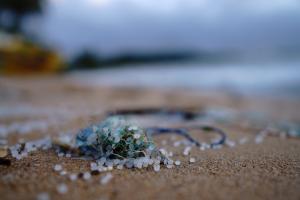 15 June 2026
Tiny plastic particles in sewage can carry viruses and drug-resistant bacteria into the sea, new research warns
-
 5 August 2025
University joins delegates at final round of Global Plastics Treaty negotiations
-
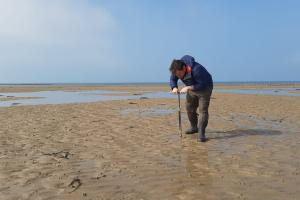 19 June 2025
Plastic pollution and global warming are combining forces to disrupt ocean life, say Bangor University scientists
-
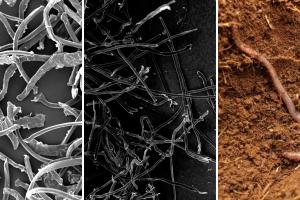 5 November 2024
Bio-based fibres could pose greater threat to the environment than conventional plastics, study suggests


Collaborators
We collaborate globally with researchers, organisations, and businesses to drive inclusive and innovative research
Aquatera (UK) | Bayer | British Geological Survey | Nanyang Technological University (Singapore) | Novozymes | Petrostrat | Surfers Against Sewage, UK | Trash Free Trails | Unilever | Universitas Nasional (Indonesia) | University of Plymouth | University of San Carlos (Philippines) | University of Stirling | University of Toronto | University of Warwick | University of Western Australia | University of Bristol | University of Peradeniya (Sri Lanka) | China Agricultural University (China) | Chinese Academy of Agricultural Sciences (China) | Ningbo University (China) | Shenyang Agricultural University (China) | Mansoura University (Egypt) | ICAR, Indian Institute of Soil Science, (India) | Vietnam Academy of Agricultural Sciences (Vietnam) | Welsh Water | We Swim Wild
Capabilities
An extensive range of laboratory and analytical capabilities are on offer:
- The Environment Centre Wales (ECW) laboratories include a radio and stable isotope lab, a Category 2 pathogen laboratory, a darkened microscope room, sample preparation laboratories and a dedicated analytical instrument lab, including FTIR, LDIR for micropalstics analysis.
- The School of Ocean Science houses specialised laboratories for radio-tracer work; fluorescence microscopy; tropical and temperate aquaria and rearing of fish larvae with continuous seawater supply; sedimentology; marine chemistry; geotechnics, geophysics and ocean hydrodynamics.
- The Hydrodynamics laboratory is an experimental facility for the simulation of water and sediment movements by waves, tides, rivers and density currents, and houses three experimental flumes with associated instrumentation.
The Henfaes Research Centre is the site of the long-term microplastics soil health experiment. Henfaes is located at Abergwyngregyn, 7 miles from Bangor, totals an area of 252 hectares. It offers unrivalled opportunities to study diverse environments from sea-level to amongst the highest land in Snowdonia, all on one farm. The lowland area provides facilities for research on cut and grazed grassland as well as arable crops and forestry. Field research, funded by UKRI, Defra, Industry, Welsh Government and the EU, includes projects to improve nutrient use efficiency using soil and canopy sensors, enhanced efficiency fertilisers (including inhibitors), advanced slurry processing (acidification and anaerobic digestion), and novel plant varieties. The Centre also has bespoke laboratories, including automated measurement systems for measuring greenhouse gases from soils and small ruminants, temperature-controlled glasshouses, an automatic weather station with telemetry data transfer, and the Bangor silvo-pastoral agroforestry experiment. Henfaes is a LEAF Innovation Centre, and Innovation Site for the Welsh Government’s Farming Connect Programme, and a site in the Global Farm Platform Network.
A state-of-the-art, purpose built 35 m shelf sea research vessel commissioned by Bangor University with multibeam capability. Read more about the RV Prince Madog
Treborth Botanic Garden is a dynamic, living laboratory for scientists and with its research infrastructure, diverse habitats and thousands of native and exotic species, it is a principal study site for published scientific research and undergraduate and postgraduate projects. The Garden maintains strong research partnerships with other botanic gardens, conservation groups, and industry, offering a wide array of research opportunities.
A world-leading centre for the development and testing of biomaterials technologies for commercial applications. The BioComposites centre offers extensive technical and academic experience in the compounding and extrusion of conventional plastics and biobased plastic systems.
The centre has polymer processing capability:
- Polymerisation capability- 5 litre to 50 litre reactive capability for PLA production (TRL1-5)
- Compounding- 30g (Brabender mixer) to 30Kg per hour compounding of polymers (twin screw extruder) (TRL1-5)
- Extrusion- cast film and pelleting capability at 30kg per hour (TRL 3-5)
- Data monition of energy (TRL 3-5)
Polymer and plastic testing and analysis:
- Barrier performance
- Instron mechanical testing
- Thermal analysis (DSC and TGA)
- Microscopy (light microscopy & SEM)
- FTIR assessment
- Accelerated weathering
- Rapid Biodegradation testing (soil block tests)
Work With Us
If you would like to get involved in any way with The Plastic Research Centre of Wales (PRC Wales) please contact us