
Sgipiwch i’r prif gynnwys
Home

Gwybodaeth ar gyfer:

  • Alumni
  • Ymgeiswyr
  • Myfyrwyr Presennol
  • Staff
  • Rhieni
  • Swyddi
  • Covid-19
  • English
Fy ngwlad:

Main Menu

    • Clirio 2025
      • Cyrsiau Clirio
      • Gwneud Cais Clirio
      • Ffonio'r Llinell Gymorth Clirio
      • Sgwrs Fyw Clirio
      • Gwybodaeth i Ddeiliaid Cynnig
      • Diwrnodau Agored Clirio
    • Llety i Fyfyrwyr
      • Darganfod Eich Ystafell Berffaith
      • Sicrwydd Llety
    • Amdanom Ni
      • Taith Rithwir
      • Clybiau a Chymdeithasau
      • Rhesymau dros astudio yn lleol
      • Bangor a'r Ardal

    Dyddiau Agored Clirio

    • Israddedig
      • Cyrsiau A–Y
      • Meysydd Pwnc
      • Clirio 2025
      • Sut i Wneud Cais
      • Wedi Gwneud Cais
      • Gwybodaeth i Ddeiliaid Cynnig
      • Ffioedd a Chyllid
      • Ysgoloriaethau a Bwrsariaethau
      • Ehangu Mynediad
      • Astudio Drwy'r Gymraeg
      • Astudio Rhan-Amser
      • Prentisiaethau Gradd
      • Astudio Dramor
      • Cyfleoedd Profiad Gwaith
      • Llety i Fyfyrwyr
      • Prosbectws Poced
      • Calendr Academaidd
    • Ôl-radd Trwy Ddysgu
      • Cyrsiau A-Y
      • Meysydd Pwnc
      • Sut i Wneud Cais
      • Ffioedd a Chyllid
      • Ysgoloriaethau a Bwrsariaethau
      • Addysg Weithredol
      • Cychwyn Mis Ionawr
      • Astudio Rhan-Amser
      • Cyrsiau Byr a DPP
      • Cyrsiau Byr a DPP A-Y
    • Ymchwil Ôl-radd
      • Cyrsiau A-Y
      • Meysydd Pwnc
      • Sut i Wneud Cais
      • Cyllid
      • Yr Ysgol Ddoethurol

    Dod o hyd i Gwrs

    Clirio 2025

    Gwybodaeth i Ddeiliaid Cynnig

    Archebu Prosbectws Poced

    Dyddiau Agored

    Taith Rhithiwr

    • Bywyd Myfyrwyr
      • Hafan Bywyd Myfyrwyr
      • Bangor a’r Ardal
      • Bywyd Cymdeithasol ac Adloniant
      • Llety i Fyfyrwyr
      • Clybiau a Chymdeithasau
      • Chwaraeon
      • Taith Rhithiwr
      • Fideos a Flogs
    • Eich Profiad ym Mangor
      • Croeso 2024
      • Cefnogaeth i Fyfyrwyr
      • Sgiliau a Chyflogadwyedd
      • Astudio neu Gweithio Dramor
      • Ffioedd a Chyllid
      • Llysgenhadon Myfyrwyr

    Proffiliau Myfyrwyr

    Gwyliwch ein Fideos

    Wythnos Groeso

    Taith Rhithiwr

    • Ymchwil
      • Hafan Ymchwil
      • Ein Hymchwil
      • Ymchwil o fewn ein Ysgolion Academaidd
      • Sefydliadau a Chanolfannau Ymchwil
      • Porth Ymchwil
      • Gwasanaeth Cymorth Integredig Ymchwil ac Effaith (IRIS)
      • Ynni
      • Newyddion Ymchwil
      • REF 2021
    • Cyfleoedd Ymchwil Ôl-raddedig
      • Ymchwil Ôl-raddedig
      • Ysgol Ddoethurol
    • Digwyddiadau a Chyfleoedd Hyfforddi
      • Datblygu Ymchwilwyr
    • Y Brifysgol
      • Amdanom Ni
      • Ein Cenhadaeth
      • Strategaeth 2030
      • Adroddiad Blynyddol a Datganiadau Ariannol
      • Ein Lleoliad
      • Ysgolion Academaidd a Cholegau
      • Gwasanaethau a Chyfleusterau
      • Swyddfa'r Is-Ganghellor
      • Gweithio gyda Busnes
      • Gweithio gyda'r Gymuned
      • Cynaliadwyedd
      • Iechyd a Lles
      • Iechyd a Lles
      • Cysylltwch â Ni
    • Gweithio i Ni
      • Swyddi
    • Rheolaeth a Llywodraeth y Brifysgol
      • Polisïau a Gweithdrefnau’r Brifysgol
      • Datganiad ar Gaethwasiaeth a Masnachu Pobl
      • Rheolaeth a Llywodraethiant
    • Y Brifysgol a'r Gymuned
      • Pontio
      • Cyfleusterau Chwaraeon
      • Cyfleusterau Cynadleddau
      • Llefydd i Fwyta ac Yfed
      • Digwyddiadau Cyhoeddus
      • Ehangu Mynediad
      • Gwasanaethau i Ysgolion
    • Gwasanaethau Busnes
      • Hafan Gwasanaethau Busnes
    • Hwb Cydweithredu
      • Hwb Cydweithredu
    • Cynadleddau a Chiniawa Busnes
      • Cyfleusterau a Rhwydweithiau Busnes
      • Ciniawa Busnes
    • Eiddo Deallusol a Masnacheiddio
      • Eiddo Deallusol a Masnacheiddio
    • Newyddion
      • Newyddion Cyfredol
      • Newyddion Ymchwil
      • Newyddion Myfyrwyr
    • Digwyddiadau
      • Digwyddiadau
    • Cyhoeddiadau
      • Cyhoeddiadau Fflag

    Dathlu 140 mlynedd

    Darlithoedd Cyhoeddus

    • Clirio 2025
      • Cyrsiau Clirio
      • Gwneud Cais Clirio
      • Ffonio'r Llinell Gymorth Clirio
      • Sgwrs Fyw Clirio
      • Gwybodaeth i Ddeiliaid Cynnig
      • Diwrnodau Agored Clirio
    • Llety i Fyfyrwyr
      • Darganfod Eich Ystafell Berffaith
      • Sicrwydd Llety
    • Amdanom Ni
      • Taith Rithwir
    • Israddedig
      • Cyrsiau A–Y
      • Meysydd Pwnc
      • Clirio 2025
      • Sut i Wneud Cais
      • Wedi Gwneud Cais
      • Gwybodaeth i Ddeiliaid Cynnig
      • Ffioedd a Chyllid
      • Ysgoloriaethau a Bwrsariaethau
      • Ehangu Mynediad
      • Astudio Drwy'r Gymraeg
      • Astudio Rhan-Amser
      • Prentisiaethau Gradd
      • Astudio Dramor
      • Cyfleoedd Profiad Gwaith
      • Llety i Fyfyrwyr
      • Prosbectws Poced
      • Calendr Academaidd
    • Ôl-radd Trwy Ddysgu
      • Cyrsiau A-Y
      • Meysydd Pwnc
      • Sut i Wneud Cais
      • Ffioedd a Chyllid
      • Ysgoloriaethau a Bwrsariaethau
      • Addysg Weithredol
      • Cychwyn Mis Ionawr
      • Astudio Rhan-Amser
      • Cyrsiau Byr a DPP
      • Cyrsiau Byr a DPP A-Y
    • Ymchwil Ôl-radd
      • Cyrsiau A-Y
      • Meysydd Pwnc
      • Sut i Wneud Cais
      • Cyllid
      • Yr Ysgol Ddoethurol

    Dod o hyd i Gwrs

    Clirio 2025

    Gwybodaeth i Ddeiliaid Cynnig

    Archebu Prosbectws Poced

    Dyddiau Agored

    Taith Rhithiwr

    • Bywyd Myfyrwyr
      • Hafan Bywyd Myfyrwyr
      • Bangor a’r Ardal
      • Bywyd Cymdeithasol ac Adloniant
      • Llety i Fyfyrwyr
      • Clybiau a Chymdeithasau
      • Chwaraeon
      • Taith Rhithiwr
      • Fideos a Flogs
    • Eich Profiad ym Mangor
      • Croeso 2024
      • Cefnogaeth i Fyfyrwyr
      • Sgiliau a Chyflogadwyedd
      • Astudio neu Gweithio Dramor
      • Ffioedd a Chyllid
      • Llysgenhadon Myfyrwyr

    Proffiliau Myfyrwyr

    Gwyliwch ein Fideos

    Wythnos Groeso

    Taith Rhithiwr

    • Ymchwil
      • Hafan Ymchwil
      • Ein Hymchwil
      • Ymchwil o fewn ein Ysgolion Academaidd
      • Sefydliadau a Chanolfannau Ymchwil
      • Porth Ymchwil
      • Gwasanaeth Cymorth Integredig Ymchwil ac Effaith (IRIS)
      • Ynni
      • Newyddion Ymchwil
      • REF 2021
    • Cyfleoedd Ymchwil Ôl-raddedig
      • Ymchwil Ôl-raddedig
      • Ysgol Ddoethurol
    • Digwyddiadau a Chyfleoedd Hyfforddi
      • Datblygu Ymchwilwyr
    • Y Brifysgol
      • Amdanom Ni
      • Ein Cenhadaeth
      • Strategaeth 2030
      • Adroddiad Blynyddol a Datganiadau Ariannol
      • Ein Lleoliad
      • Ysgolion Academaidd a Cholegau
      • Gwasanaethau a Chyfleusterau
      • Swyddfa'r Is-Ganghellor
      • Gweithio gyda Busnes
      • Gweithio gyda'r Gymuned
      • Cynaliadwyedd
      • Iechyd a Lles
      • Iechyd a Lles
      • Cysylltwch â Ni
    • Gweithio i Ni
      • Swyddi
    • Rheolaeth a Llywodraeth y Brifysgol
      • Polisïau a Gweithdrefnau’r Brifysgol
      • Datganiad ar Gaethwasiaeth a Masnachu Pobl
      • Rheolaeth a Llywodraethiant
    • Y Brifysgol a'r Gymuned
      • Pontio
      • Cyfleusterau Chwaraeon
      • Cyfleusterau Cynadleddau
      • Llefydd i Fwyta ac Yfed
      • Digwyddiadau Cyhoeddus
      • Ehangu Mynediad
      • Gwasanaethau i Ysgolion
    • Gwasanaethau Busnes
      • Hafan Gwasanaethau Busnes
    • Hwb Cydweithredu
      • Hwb Cydweithredu
    • Cynadleddau a Chiniawa Busnes
      • Cyfleusterau a Rhwydweithiau Busnes
      • Ciniawa Busnes
    • Eiddo Deallusol a Masnacheiddio
      • Eiddo Deallusol a Masnacheiddio
    • Newyddion
      • Newyddion Cyfredol
      • Newyddion Ymchwil
      • Newyddion Myfyrwyr
    • Digwyddiadau
      • Digwyddiadau
    • Cyhoeddiadau
      • Cyhoeddiadau Fflag

    Dathlu 140 mlynedd

    Darlithoedd Cyhoeddus

Gwybodaeth ar gyfer:

  • Alumni
  • Ymgeiswyr
  • Myfyrwyr Presennol
  • Staff
  • Rhieni
  • Swyddi
  • Covid-19
Fy ngwlad:

Search

Close

Breadcrumb

  • English

Rhannwch y dudalen hon
  • Twitter
  • Facebook
  • LinkedIn

The Labour Party and the Politics of Housing in Manchester and Salford 1945-1987

A Leverhulme-funded six month pilot project, conducted by Professor Duncan Tanner (Bangor), Dr Peter Shapely (Bangor), Dr Steven Fielding (Salford) and Dr Andrew Walling (Project Research Assistant)
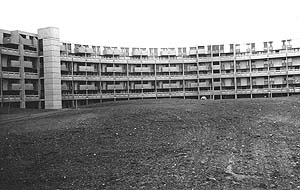
Hulme in Manchester

Start date: 1 July 2001

Steve Fielding and Duncan Tanner are well-known historians of the Labour party. They have written sharply revisionist accounts of the party's early history and its wartime role, and are currently extending this approach through books on the inter-war years and on the 1950s and 1960s. Their role in this project extends from a broader concern with the way that Labour governed cities across the UK. Peter Shapely is a historian of urban politics, and especially of Manchester. His contribution to this pilot projects is to explore the nature and weaknesses of housing policy. Andrew Walling completed his Bangor PhD thesis on Labour politics 1951-64 in 2001. This included a case study of Salford Labour politics.

The Labour councils that dominated post-war local government in many British cities built large council estates and innumerable high-rise developments. Housing programmes introduced with idealistic intentions - such as those shown in the illustrations - degenerated over time into huge failures. Many cities remain scarred by the legacy of post-war housing policy. By the time the Conservative party cut off the central government funds necessary to tackle such problems in the 1980s, the housing crisis was already a striking symbol of the broader ideological and political problems facing both the Welfare State and the Labour party. This case study of housing policy in two adjacent but different Labour-dominated cities is designed to cast light on one of democratic socialism's major post-war policy problems.

Manchester and Salford were adjacent, connected, but very different cities. Manchester was a city with a mixed population, fed by suburban commuters. Salford was a densely populated, largely industrial borough bisected by road and rail networks and unable to house all its inhabitants inside its boundaries. Both councils developed interventionist housing policies. Both had left-wing Labour parties. However, there were substantial differences in the way that the parties and the Labour groups on the council operated. By the 1990s this had become more pronounced, with Manchester's council operating pro-actively to improve housing and attract new attention and amenities to the city. It became a 'model' New Labour council. Salford has not prospered in the same way, despite active efforts to devise new community initiatives.

This project explores and explains these developments. It will test a series of commonly-held assumptions: that local councils made poor decisions in order to satisfy growing demand; that councils dominated by a single party were ruled by ideological - and sometimes corrupt - cliques; that local councillors were passive administrators. Many people have a very negative image of local government, Labour councils, 'old Labour' and of the period when public housing became a feature of local government activity. We will be examining whether this image is justified.

Our work to date suggests we will be offering a controversial analysis. There is every indication that the idealistic post-war plans evident in other parts of the country (1) were equally evident in Manchester and Salford (2) and that this enthusiasm and idealism persisted into the 1960s.(3) We have already found that in many Manchester and Salford wards, few Labour members took an active part in politics by the 1960s, and power came to rest in the hands of a few individuals. In Salford's Trinity Ward, for example, only six members attended more than half the meetings in the early 1960s. In Manchester's Newton Heath ward, most meetings contained just 10-20 per cent of the membership. We are exploring whether this was the case elsewhere.(4) However, we have also found evidence of attempts to address this position, gain more members and involve the community. Whilst corruption existed in Salford (5) it was matched by less-known instances of devotion and commitment to tackling a huge and seemingly intractable problem. There is some indication that 'old labour' councils of the 1950s and 1960s were rather better than the mythology would suggest, and perhaps that their failure was not just adherence to 'traditional' Labour values but a subservient support for 'modernising' ideas which in retrospect did not suit the local communities.(6) However, we also know there was a rising tide of complaints by the later 1960s. How - and whether - the Labour party responded to this is a focus of our research.

We cannot state how 'typical' these circumstances were at this stage. However, we know that domination by a small (but locally-respected) group of councillors and officials was not unique to Manchester and Salford (7) that the decline of local Labour activism was common elsewhere (8) and that other inner-city Labour councils faced similar problems - in some instances less energetically. However, we need to know far more about how and why decisions were made by the Labour party. Although studies of housing developments have focused on why high-rise flats were built, (10) we also need to know how council leaders decided where that housing was to be located and who was to be rehoused.

The findings from this project will be reported in journal articles, and will be summarised on these web pages. Research projects such as these are utilised in the teaching process at Bangor. They supply material for Shapely's module on urban politics in Britain and the USA and Tanner's module on the history of the Labour party. We also use these projects to provide ideas for third year undergraduate research projects.

If you want to know more about the project, or about research and teaching at Bangor - or if you were involved in any of the events we are researching and could give us your views - contact a.walling@bangor.ac.uk or p.shapely@bangor.ac.uk.

Notes

  1. Nick Tiratsoo, Reconstruction, affluence and Labour politics: Coventry 1945-60 (London: Routledge, 1990), J. Hasegawa, Replanning the blitzed city centre (Bukingham: Open University Press 1992). More generally, Steven Fielding, Peter Thompson and Nick Tiratsoo, ''England arise!' The Labour party and popular politics in 1940s Britain (Manchester: Manchester University Press, 1995).
  2. Manchester City Labour Party, Manchester tomorrow - post-war reconstruction (1945).
  3. Manchester City Council Planning Department, A new community: the redevelopment of Hulme (1965) and for Salford, Andrew Walling, 'Modernisation, policy debate and organisation in the Labour Party 1951-64', Bangor University PhD thesis 2001, chapter 6.
  4. Steven Fielding, 'The Salford Labour Party: a brief introduction to the microfilm edition of Salford Labour Party records' (Wakefield: Microform Academic Publishers, 1997); Steven Fielding, The Labour party. Socialism and society since 1951 ((Manchester: Manchester University Press, 1997), pp.80-1.
  5. Albert Jones, From Dock to Dock (self-published, no date).
  6. Walling, op cit.
  7. Sue Goss, Local Labour and local government. A study of changing interests, politics and policy in Southwark from 1919 to 1982 (Edinburgh: Edinburgh University Press, 1988).
  8. Duncan Tanner, 'Labour and its membership', in D. Tanner, P. Thane and N. Tiratsoo (eds.), Labour's First Century (Cambridge: Cambridge University Press, 2000).


Hafan

Amdanom Ni

Ysgolion Academaidd a Cholegau

  • Hanes, Athroniaeth a Gwyddorau Cymdeithas
    • Hafan
    • Gwybodaeth am yr adran
      • Staff
      • Bangor a’r ardal
      • Cysylltu â ni
    • Israddedigion
      • Proffiliau Myfyrwyr
      • Astudio tramor
    • Cyrsiau Ôl-raddedigion Trwy Ddysgu
    • Cyrsiau Ymchwil Ôl-raddedigion
    • Archebu Prospectws
    • Ymchwil
      • Ymchwil Moeseg
    • Newyddion a Digwyddiadau
      • Digwyddiadau
      • Cynhadleddau
    • Fideos
    • Cysylltu â ni
Hafan

Dilynwch Ni

  • Twitter
  • Facebook
  • Instagram
  • Youtube
  • LinkedIn

Prifysgol Bangor

Bangor, Gwynedd, LL57 2DG, UK

+44 (0)1248 351151

Cysylltwch â Ni

Ymweld â’r Brifysgol

Mapiau a Chyfarwyddiadau Teithio

Polisi

  • Cydymffurfiaeth Gyfreithiol
  • Datganiad Deddf Caethwasiaeth Modern 2015
  • Datganiad Hygyrchedd Prifysgol Bangor
  • Polisi Iaith Gymraeg
  • Preifatrwydd a Chwcis
Map

Mae Prifysgol Bangor yn Elusen Gofrestredig: Rhif 1141565

© 2020 Prifysgol Bangor